
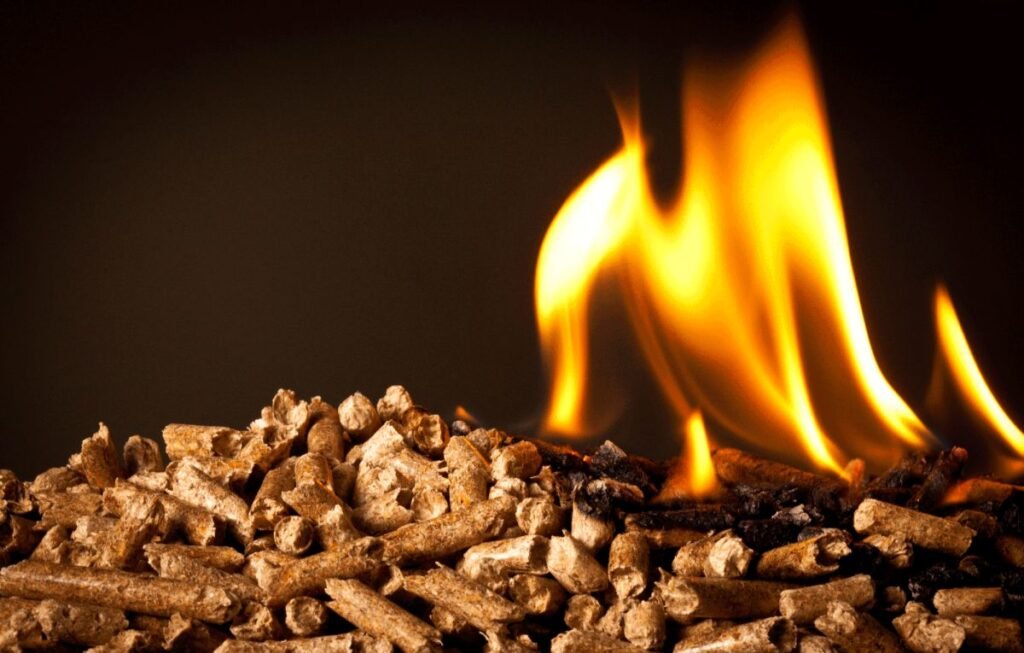
Every sawmill, every woodworking shop, every furniture factory shares a common byproduct. It accumulates under the saws, around the planers, and in the dust collection bins. It’s everywhere—fine particles mixed with larger shavings, all of it dry, dusty, and constantly needing to be managed. Some operations burn it in inefficient boilers, watching much of the energy go up the stack. Others pay to have it hauled away, adding an expense to an already competitive business. And in many cases, it simply piles up in corners, creating fire hazards and taking up space that could be used for finished product.
That material is sawdust, and it represents one of the most underutilized energy sources in the wood processing industry. The energy content is real—comparable to coal on a per-kilogram basis. The challenge has always been finding a practical way to capture that energy. Sawdust in its raw form is difficult to handle, expensive to transport, and inefficient to burn. But when it’s processed into dense, uniform pellets, it becomes a fuel that’s clean, consistent, and marketable.
The Composition of Sawdust
Sawdust is essentially wood that’s already been reduced to small particles. It contains the same three primary components as solid wood: cellulose, hemicellulose, and lignin. The cellulose and hemicellulose are the carbohydrates that provide the energy content. The lignin is the natural binder that holds the wood fibers together—and it’s also what makes pelletizing possible without adding artificial binders.
The proportions vary by species. Hardwoods generally have a higher proportion of cellulose and a higher energy content than softwoods. But the calorific value of all species falls within a similar range: roughly 17 to 19 megajoules per kilogram on a dry basis. This is comparable to the energy content of sub-bituminous coal, making wood pellets a viable alternative fuel.
Moisture content is a critical factor. Fresh sawdust from green lumber can have moisture content of 40% to 60%. For pellet production, this needs to be reduced to 10% to 12%. The drying process is one of the most energy-intensive steps in pellet production, but it’s essential for achieving durable, high-quality pellets.
Particle size matters too. Sawdust from different machines varies significantly in size. A planer produces larger shavings; a sander produces fine dust. For consistent pellet quality, the material must be ground to a uniform particle size, typically 3 to 5 millimeters. This grinding step ensures that the material feeds smoothly through the pellet mill and produces pellets of consistent density.
The Processing Sequence
The transformation of sawdust into pellets follows a sequence of processing steps. Each step is important for achieving consistent product quality.
Drying is the first step. Most sawdust contains too much moisture for effective pelletizing. A rotary drum dryer is the most common equipment for this task. The sawdust is fed into the dryer, where it’s exposed to hot air. The dried material emerges at the desired moisture content of 10% to 12%. The drying step is energy-intensive, and the efficiency of the dryer affects the overall operating cost.
The dried sawdust is then ground to a uniform particle size. A hammer mill reduces the material to particles of roughly 3 to 5 millimeters. This grinding step is important because it ensures consistent flow through the pellet mill and uniform pellet quality. The hammer mill also breaks up any lumps that may have formed during drying.
Next comes conditioning. The ground material is treated with steam to soften the fibers and activate the natural lignin. The moisture content may be adjusted slightly at this stage. Conditioning is critical for achieving durable pellets that hold together during handling and transport. Without proper conditioning, the pellets will be weak and prone to breaking.
The actual pelletizing happens in a sawdust pellet machine. The conditioned material is fed into a die chamber, where rotating rollers press it through the die holes. The friction generates heat, which melts the lignin and binds the particles together. The pellets emerge as continuous rods, which are cut to length by rotating knives. The temperature during pelletizing is typically 80°C to 100°C, sufficient to melt the lignin without degrading the wood fiber.
The hot pellets are then cooled. A cooler reduces the temperature and moisture content to stable levels. The final moisture content is typically 8% to 10%. The cooled pellets are screened to remove fines, which are returned to the process. The finished pellets are then ready for packaging or bulk storage.
Equipment Scale and Applications
The scale of the equipment determines the scale of the operation. Small machines, capable of producing a few hundred kilograms per hour, are suitable for smaller woodworking shops or farms. These machines are compact, affordable, and can be operated by a single person. They’re often used by operations that want to process their own waste into fuel for on-site heating.
For larger operations, the scale increases accordingly. An industrial biomass pellet machine for sale can process several tons of sawdust per hour. These machines are built for continuous operation, with heavy-duty components and automated control systems. The die and rollers are larger, the bearings are more robust, and the motor is more powerful. The control system manages the feed rate, conditioning parameters, and temperature to maintain consistent pellet quality.
The choice between a small machine and an industrial machine depends on the volume of sawdust produced and the intended market for the pellets. A furniture factory producing a few tons of sawdust weekly may be well-served by a smaller machine. A large sawmill producing dozens of tons daily will require an industrial-scale system.
The investment in an industrial biomass pellet machine for sale is significant, but the economics reflect the scale. The per-ton cost of production decreases as the volume increases. The larger machine can produce pellets at a lower cost per ton, making it more competitive in the market.
The Wood Pellet Mill
The pelletizing process itself is performed by the wood pellet machine. This is the heart of the operation—the equipment that transforms the conditioned, ground sawdust into finished pellets. The wood pellet machine must be robust enough to handle the demands of continuous operation.
The die is the most critical component of the wood pellet machine. It’s a thick metal ring with precision-drilled holes. The material is forced through these holes by rollers that press from the inside of the ring. The die must be made from a wear-resistant alloy, as the abrasive nature of wood fiber can cause wear over time.
The rollers are the other critical component. They press the material against the die surface. The gap between the rollers and the die must be precisely set to achieve the correct compression. The roller bearings must be sealed to prevent contamination from the fine wood dust.
The motor must provide sufficient power for the compression process. The power requirement depends on the capacity of the machine and the characteristics of the material. A machine that’s underpowered will struggle to maintain production, while an overpowered machine will waste energy.
The Evolution of the Technology
The technology for producing wood pellets has evolved significantly over the past few decades. Early machines were often adapted from other applications and didn’t handle wood fiber well. The abrasive nature of the material caused premature wear. The variable moisture content caused operational problems.
Modern wood pellet machines are designed specifically for wood fiber. The components are chosen for their resistance to abrasion. The feeding mechanisms are designed to handle variable material. The control systems manage the process to maintain consistency.
The evolution continues. New materials are extending the life of dies and rollers. Improved control systems are making operation easier and more consistent. The growing market for wood pellets is driving continued innovation.
Understanding the Market
The market for wood pellets is diverse and growing. The largest market is residential heating. Homeowners use pellets in stoves and boilers, and the market values consistent quality, low ash content, and good durability.
The industrial market is growing. Power plants and heating plants use wood pellets as a renewable fuel. These buyers typically purchase in large quantities and value consistent quality and reliable supply.
The international trade in wood pellets is substantial. Europe is the largest consumer, with imports from North America and other regions. The transport of pellets is economical because of their density. A shipment of pellets contains far more energy than the same volume of sawdust.
The price of wood pellets is influenced by several factors, including the price of competing fuels, the cost of production, and the demand from different markets. For producers, the key to profitability is controlling production costs and accessing markets that pay a premium for quality.
Quality and Consistency
In the wood pellet market, quality and consistency are essential. Buyers want pellets that perform reliably in their equipment. They don’t want variations in moisture content or durability.
Quality control in wood pellet production begins with the raw material. The sawdust should be tested for moisture content and quality. The grinding process should be monitored to ensure consistent particle size. The conditioning parameters should be adjusted based on the material characteristics.
During pelletizing, the temperature and pressure should be monitored. The pellet durability should be tested regularly. The moisture content of the finished pellets should be measured to ensure it’s within the target range.
A Practical Perspective
For wood processors, the decision to invest in pelletizing equipment is based on several factors. The availability of sawdust, the cost of alternative disposal, the capital cost of the equipment, and the potential revenue from pellet sales all play a role.
For a wood processor producing a steady stream of sawdust, the economics are often favorable. The sawdust is a byproduct that must be managed. Converting it into pellets reduces disposal costs and generates revenue. The equipment investment typically pays for itself within a few years.
The specific economics depend on the scale of the operation and the local market conditions. But for many wood processors, sawdust pelletizing represents a practical way to reduce waste and create value. The technology is proven, the equipment is available, and the market is established.
View more:https://pelletizerextruder.com/sawdust-pellet-machine/