
As sheep farming becomes more commercialized, many producers are moving from purchasing finished feed to processing feed on their own farms. This approach can provide greater control over ingredients, pellet specifications, and production schedules. However, selecting the right production capacity is essential. A system that is too small may struggle to meet daily demand, while excessive capacity can increase investment without providing enough practical benefit.
For farms considering a 2 ton per hour sheep feed pellet machine, the first question should not simply be whether the equipment can reach the stated output. Instead, buyers should determine how much feed the farm actually needs, what ingredients are available, and how many hours the equipment will operate each day.
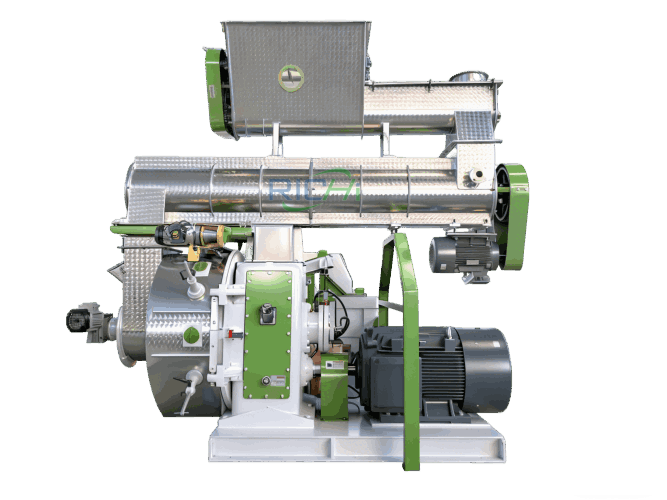
Estimating Actual Feed Demand
A simple capacity calculation can provide a useful starting point. If a farm requires 8 tons of feed per day and plans to operate its pelletizing section for four hours, an output of approximately 2 tons per hour would theoretically meet the daily requirement.
However, real production planning should include time for material preparation, equipment adjustment, cleaning, maintenance, and possible interruptions. Therefore, the nominal machine capacity should not automatically be treated as the same as continuous finished-pellet output.
This is particularly important for farms with seasonal changes in feed consumption.
What Ingredients Will Be Processed?
Sheep feed may contain alfalfa, hay, grass, corn, wheat bran, soybean meal, minerals, and other ingredients. These materials do not all behave the same way during processing.
Long and fibrous forage generally requires chopping or crushing before pelletizing. Grain ingredients may require finer grinding, while a formulated feed may contain several components that need accurate batching and thorough mixing.
The moisture level of the material can also affect pellet formation. Proper preparation helps improve material flow through the pelletizing chamber and contributes to more consistent pellets.
Why Does Capacity Matter?
Capacity influences more than production speed. It affects the size of the feeding system, conveyors, mixer, cooler, electrical system, and other supporting equipment.
A 2-ton-per-hour system can be suitable for a medium-sized operation that needs regular production but does not require a large industrial plant. It may also provide enough reserve capacity for future herd expansion.
Nevertheless, farms should avoid choosing capacity based solely on future expectations. If the available raw materials are limited, installing an oversized system may leave much of the equipment underutilized.
Comparing Different Ruminant Feed Systems
Some livestock operations raise sheep alongside goats. Although both are ruminants, their feed formulations may differ according to age, growth stage, production purpose, and local feeding practices.
When evaluating related equipment, goat feed pellet machine capacity can provide a useful comparison point for farms considering multi-species feed production. The important distinction is that the capacity requirement should be calculated from the actual feed demand rather than assuming that one livestock application automatically determines another.
A flexible production system can sometimes process different ruminant feed formulas with suitable adjustments to formulation and operating parameters.
What Supporting Equipment Is Required?
A pelletizing machine normally works as part of a larger processing system.
Forage may first pass through a cutter or crusher. A hammer mill can further reduce particle size when required. After grinding, ingredients are weighed and mixed before entering the pelletizing section.
Fresh pellets can then pass through a cooler and screening system. The finished material may be transported to storage bins or packaging equipment.
For larger farms, conveyors and centralized electrical controls can reduce manual handling and make the production process easier to manage.
Pellet Size and Feed Requirements
Pellet diameter should be selected according to the feeding method and target animals. Different die specifications can produce different pellet sizes.
Farmers should communicate the desired diameter before purchasing equipment because die configuration can influence production performance.
Pellet quality also depends on raw material characteristics, formulation, moisture, and operating conditions. Capacity alone cannot guarantee a satisfactory finished product.
Planning for Future Expansion
A farm may begin with one herd size and gradually expand. This makes scalability an important consideration when designing the production system.
Instead of purchasing the largest available machine, producers can calculate current demand, expected growth, operating hours, and available raw materials. This provides a more realistic basis for equipment selection.
A properly matched pellet production line can combine preparation, grinding, mixing, pelletizing, cooling, screening, and conveying into one coordinated process.
Before requesting a quotation, farmers should prepare information about feed ingredients, daily consumption, target pellet size, operating schedule, and expected future capacity. This allows equipment suppliers to recommend a configuration that is technically appropriate rather than simply offering a standard machine.
For additional background when comparing livestock feed-processing options, Learn More Here can serve as a reference point for understanding different production approaches.
Ultimately, the best capacity is the one that fits the farm’s real production schedule. For operations with sufficient raw materials and regular feed demand, a 2-ton-per-hour configuration can provide a practical balance between output, equipment utilization, and future production needs.
Related post:https://pelletizerequipment.com/cattle-feed-pellet-machine/