
Cotton stalks are widely available after the harvest season, but their low bulk density makes them inconvenient to collect, transport, and store. For agricultural businesses with a steady supply of this residue, pelletizing can turn loose stalks into a denser and easier-to-handle biomass fuel.
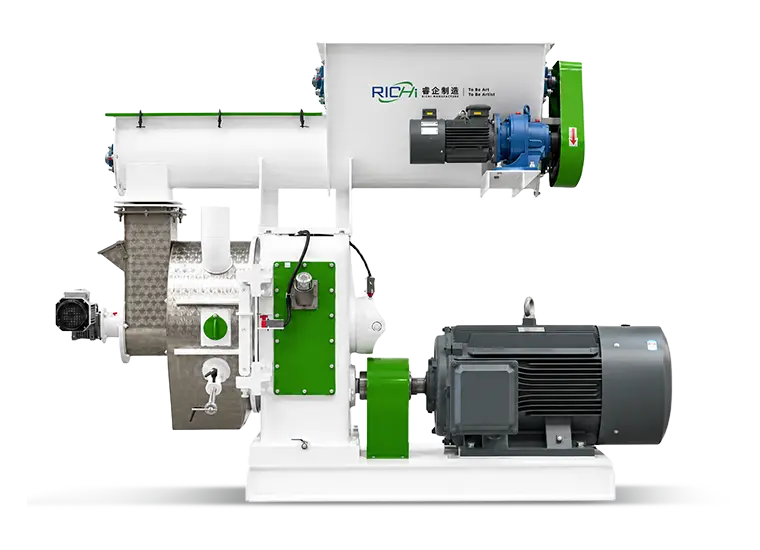
A cotton stalk pellet mill for small plants can form prepared cotton stalk particles into compact pellets. The main challenge for a small facility is not simply choosing a pellet mill. The entire process needs to remain practical, compact, and matched with the available raw material.
Where Should a Small Plant Start?
The first step is to examine the cotton stalks before purchasing equipment.
Important information includes:
- Moisture content
- Stalk length and diameter
- Amount available per day
- Presence of leaves and branches
- Soil or foreign-material contamination
- Desired pellet diameter
- Expected daily production
These details determine whether the project needs cutting, crushing, drying, or additional cleaning equipment.
A small plant should avoid building a complicated process before the raw material has been evaluated.
Why Cotton Stalks Need Pre-Processing
Long stalks cannot normally enter the pellet mill directly.
A cutting machine can first reduce the length of the stalks. A hammer mill can then produce smaller particles that are more suitable for compression.
This preparation also makes material feeding more consistent.
The target particle size should correspond to the pellet mill and die being used. Producing extremely fine powder is not automatically better because excessive grinding can increase electricity consumption.
Moisture Control for Small Facilities
Moisture becomes especially important when cotton stalks are collected immediately after harvesting.
Material that contains excessive water may require mechanical drying before pelletizing. However, if the stalks have already been naturally dried and stored properly, the plant may not need a large drying system.
This can make a significant difference for small projects because dryers can add considerable equipment, energy, and installation requirements.
A moisture test before equipment selection is therefore useful.
What Type of Pellet Mill Is Needed?
The pellet mill compresses prepared cotton stalk particles through a die.
Pressure and friction generate heat during compression, allowing the biomass to form cylindrical pellets.
The required die diameter depends on the intended fuel application and customer requirements.
A small plant may choose a machine with a capacity that corresponds to its actual daily raw-material supply instead of selecting a high-capacity model that cannot operate continuously.
This approach can also leave room for future expansion.
Can Other Biomass Be Processed?
Some biomass pellet plants eventually process more than one type of agricultural residue.
For example, a hemp pellet machine belongs to the same general category of biomass pelletizing equipment but is configured around hemp biomass rather than cotton stalks.
Although both materials are fibrous biomass, their moisture, density, and fiber characteristics can differ.
A plant planning to process multiple materials should therefore test each major feedstock and determine whether the same preparation and pelletizing settings can be used.
What Happens After Pelletizing?
The pellets leave the compression chamber hot and relatively soft.
Cooling reduces their temperature and helps stabilize the finished product. The pellets can then pass through a screener to remove fines and broken pieces.
For a small plant, a compact cooling and screening arrangement may be sufficient.
If production later increases, conveyors, storage bins, and automated handling equipment can be integrated into the layout.
How Should a Small Plant Handle Storage?
Biomass pellets should be protected from moisture after production.
A dry warehouse or covered storage area can help prevent the pellets from absorbing water from rain or humid air.
The storage method also depends on how the pellets will be sold.
A producer supplying local customers may use bags, while a larger operation may require bulk storage and loading equipment.
Storage capacity should reflect both production volume and transportation frequency.
What Does a Practical Small-Plant Layout Look Like?
A basic process can be arranged as:
Cotton Stalk → Cutting → Crushing → Drying if Required → Pelletizing → Cooling → Screening → Packing
The material should move through the factory in a logical direction to reduce unnecessary handling.
For a small site, equipment can be positioned close together while still leaving enough space for maintenance and replacement of wear parts.
The operator should also have safe access to motors, bearings, screens, dies, and other components that require regular inspection.
How Can Investment Be Controlled?
Small plants can control initial investment by matching each machine to the actual production requirement.
For example, manual packing may be adequate at the beginning instead of installing a fully automatic packaging system. Likewise, a dryer may be omitted when naturally dried cotton stalks already meet the required moisture range.
The key is to avoid purchasing equipment that does not contribute to the required production process.
At the same time, the layout should leave enough room for future conveyors, storage, or additional pelletizing capacity.
What Information Should Be Sent to a Supplier?
A supplier can prepare a more realistic configuration when the buyer provides:
- Cotton stalk photos or samples
- Raw-material moisture
- Required pellet diameter
- Expected output
- Daily operating hours
- Electricity specifications
- Available factory space
- Intended fuel application
A sample test can also help determine the appropriate preparation process.
The pellet machine should ultimately be selected as part of the complete production system rather than treated as an isolated piece of equipment.
For small agricultural businesses, a compact and properly matched process can make cotton stalk utilization more practical without requiring an oversized industrial facility. Additional biomass-processing details and equipment information are available through this link.
Related Post: https://pelletizerequipment.com/corn-stalk-pellet-machine/