
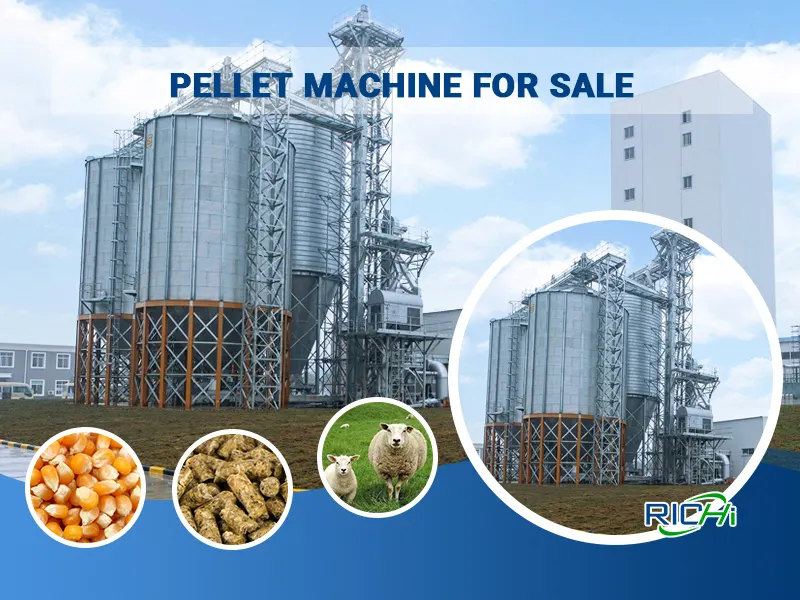
Producing balanced feed for cattle, sheep, goats, and other farm animals involves much more than simply grinding grains and pressing them into pellets. A well-designed feed processing system needs to consider animal nutrition, raw material characteristics, production capacity, moisture content, storage conditions, and the type of finished feed required.
For small farms, feed preparation may begin with basic equipment such as a grinder and mixer. As the number of animals increases, however, a more organized processing system becomes useful. Understanding how each stage works can help farmers and feed producers choose equipment according to actual production needs rather than simply following standard equipment lists.
What Should Be Considered Before Building a Feed Processing System?
The first step is to determine what animals the feed will be used for. Cattle, sheep, goats, pigs, and poultry have different nutritional requirements, so the processing method should match the formulation.
For example, cattle diets often contain relatively large quantities of forage, grains, protein sources, minerals, and other ingredients. A dairy cow ration may have different nutritional characteristics from a beef cattle finishing diet. Similarly, young animals usually require different particle sizes and nutrient concentrations from mature animals.
Production capacity is another important factor. A farm producing only several hundred kilograms of feed per day does not necessarily need the same equipment configuration as a commercial facility producing several tons per hour. Estimating daily feed consumption, working hours, future expansion, and seasonal changes in demand can provide a more realistic basis for equipment selection.
A typical livestock feed mill may include raw material receiving, cleaning, crushing, batching, mixing, pelleting, cooling, screening, and packaging sections. Not every project needs every piece of equipment, and the final configuration should depend on the feed formula and expected output.
How Should Livestock Feed Raw Materials Be Selected?
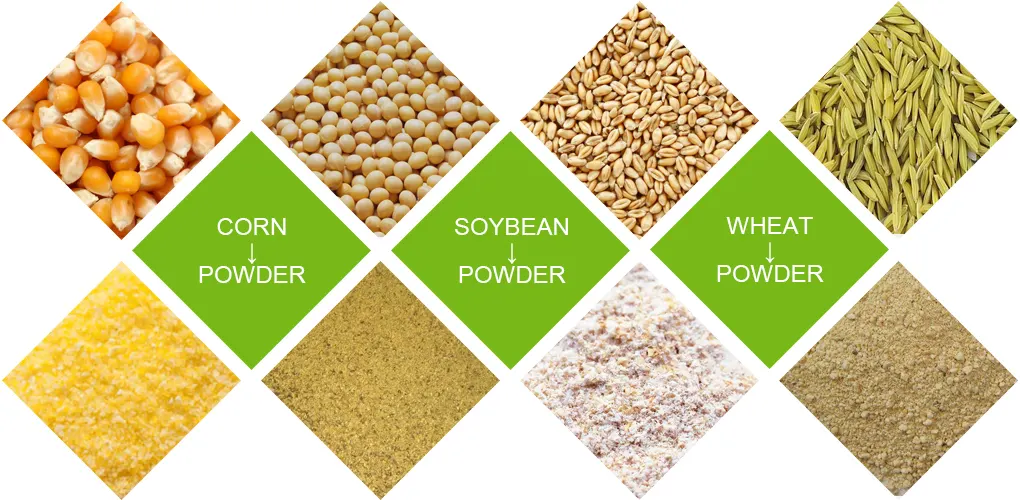
Raw materials determine both the nutritional value and processing characteristics of finished feed. Common ingredients include corn, wheat, barley, soybean meal, rapeseed meal, bran, alfalfa, rice bran, mineral supplements, and various protein or energy sources.
However, simply having nutritious ingredients does not guarantee good feed quality. Raw materials also need to be evaluated for moisture, particle size, impurities, storage stability, and consistency.
For example, grains with excessive moisture may be difficult to store safely and can affect grinding and pelleting performance. Ingredients containing too much fiber may also influence pellet durability and production capacity.
A practical formulation normally combines several categories of ingredients:
- Energy sources such as corn and wheat
- Protein sources such as soybean meal and other oilseed meals
- Fiber sources such as bran and forage materials
- Mineral and vitamin supplements
- Functional additives when required by the formulation
The exact ratio should be determined according to the animal species, growth stage, production purpose, and nutritional requirements. Feed formulation is therefore a nutritional task rather than simply an equipment-related decision.
How Should Cattle Feed Ingredients Be Proportioned?
Cattle feed formulations can vary considerably depending on whether the feed is intended for calves, beef cattle, dairy cattle, or breeding animals. There is no single formula that works for every farm.
For instance, a finishing ration may emphasize energy density, while a dairy ration needs to support milk production without creating nutritional imbalances. Calves may require more carefully controlled protein, energy, minerals, and particle characteristics.
Before processing, ingredients should ideally be weighed according to the selected formula. Accurate batching is especially important when the formulation contains small quantities of minerals, vitamins, or other concentrated components.
After weighing, ingredients are usually ground to an appropriate particle size before entering the mixer. Excessively coarse materials can reduce mixing uniformity, while excessive grinding may increase energy consumption without providing additional benefits.
The goal is not to make every ingredient as fine as possible. Instead, particle size should be suitable for the animal, formulation, and subsequent processing stages.
Does Feed Need to Be Ground Before Mixing?
Grinding is common in many feed processing systems because reducing particle size can improve mixing uniformity and make pelleting easier. However, the required grinding degree depends on the raw material.
Corn and other grains may be processed through a hammer mill or similar grinder. Fibrous materials may require different handling, particularly when they contain long strands or irregular pieces.
The grinder should therefore be selected based on the raw material rather than simply on the desired production capacity. Screen size, rotor speed, moisture content, and material characteristics can all affect final particle size.
After grinding, materials are transferred to batching and mixing equipment. Good mixing is essential because the objective is to distribute nutrients evenly throughout the feed. If vitamins, minerals, or other micro-ingredients are not distributed properly, the nutritional value of individual portions may vary.
Why Is Mixing So Important in Feed Production?
Mixing is one of the most important stages in feed production because even a well-designed formula can produce inconsistent feed if ingredients are not evenly distributed.
A mixer must provide sufficient blending without unnecessarily extending the processing cycle. Different mixer designs can be used depending on production scale and formulation requirements.
Dry ingredients are usually mixed first, while liquid components, when required, may be introduced during or after the main mixing stage. The addition point and quantity of liquid should be carefully controlled because excessive moisture can make subsequent pelleting difficult.
Mixing time should also be determined through practical testing rather than assuming that a longer cycle always produces better results. Overmixing may increase energy consumption and reduce production efficiency without improving uniformity.
For commercial operations, sampling and laboratory analysis can be used to verify whether the actual feed composition matches the intended formulation.
When Is Pelleting Necessary?
Not all livestock feed needs to be pelleted. Cattle and other ruminants can consume mash feed, total mixed rations, silage, hay, and other forms of feed. However, pelletizing can provide several practical advantages in certain applications.
Pellets can make handling, transportation, storage, and feeding more convenient. They can also reduce ingredient separation during transportation compared with some loose mixtures.
The pelleting process generally involves conditioning the prepared feed and forcing it through a die under pressure. Temperature, moisture, formulation, die specifications, and machine settings all influence pellet quality.
For cattle feed, pellet diameter should be selected according to the animals and the intended application. Producing extremely small pellets is not automatically better. The appropriate size should balance animal feeding behavior, pellet durability, processing efficiency, and energy consumption.
What Equipment Is Used for Cattle Feed Pellet Production?
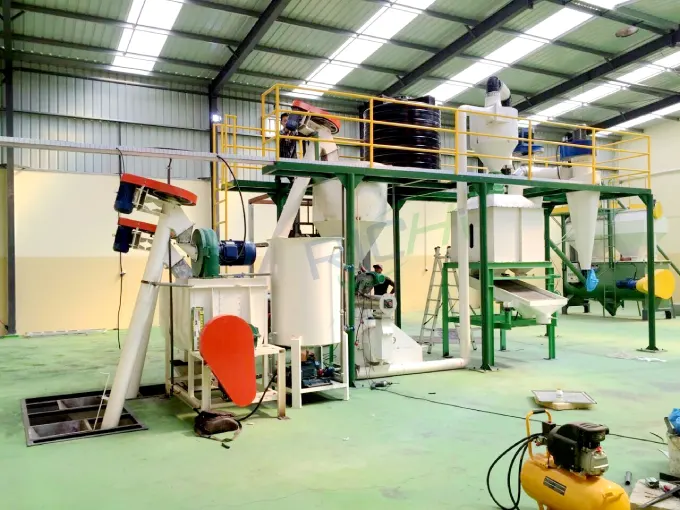
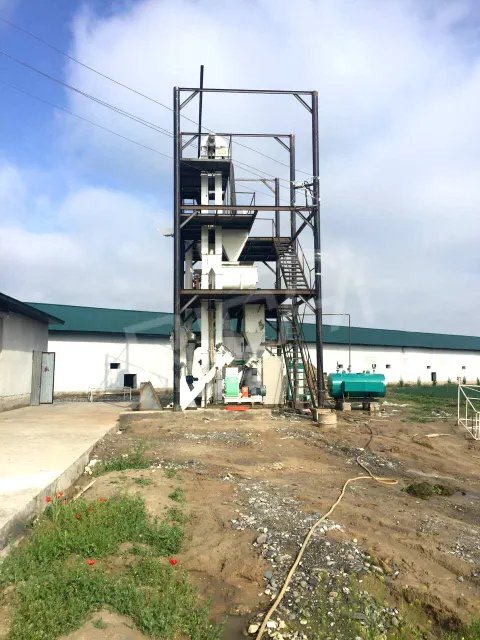
A basic pellet production system may include a grinder, mixer, pellet machine, cooler, screener, conveyor, and packaging equipment. Larger systems may include automatic batching, centralized control, dust collection, storage bins, and additional material handling equipment.
The pellet machine is one of the core pieces of equipment. Its capacity should correspond with the upstream and downstream equipment so that the entire system can operate continuously.
For farms mainly producing cattle feed, a ruminant cattle feed pellet making machine may be selected according to the formulation, raw material properties, required capacity, pellet size, and expected operating hours.
Related Post: https://commercialpelletmill.com/cattle-feed-pellet-machine/
It is also important to consider whether the machine will process only cattle feed or several types of feed. A machine intended for flexible production may need a different configuration from one designed for a single standardized formula.
Does a Feed Line Need a Cooler After Pelleting?
Cooling is generally important when pellets leave the pellet machine at elevated temperature and moisture. Fresh pellets can be relatively hot and soft, so immediate packaging may lead to condensation, deformation, or storage problems.
A counterflow cooler or another suitable cooling system can gradually reduce pellet temperature and moisture. After cooling, the pellets may pass through a screener to remove fines and return unsuitable particles to the production process.
The cooling stage should not be considered separately from the pellet mill. The capacity of the cooler, screen, conveyors, and storage equipment should be coordinated with the pellet machine.
For smaller farms, simpler cooling arrangements may sometimes be sufficient. Commercial production systems usually require more controlled cooling because large quantities of hot pellets need to be processed continuously.
How Long Does It Take to Build a Small Feed Line?
The construction period depends on the production capacity, equipment configuration, workshop conditions, automation level, and installation requirements.
A relatively simple small-scale system may be installed faster because it contains fewer machines and less complex material handling. A larger automated facility may require additional time for civil works, electrical installation, equipment alignment, commissioning, and operator training.
Before installation begins, the workshop layout should be prepared carefully. Raw materials should have a logical path from receiving to storage, grinding, batching, mixing, pelleting, cooling, and final packaging.
Poor layout can increase conveying distances and create unnecessary handling steps. A well-planned layout, by contrast, can make operation, maintenance, and cleaning easier.
For people comparing different equipment configurations, a technical blog link can also be useful when it explains how individual processing stages work rather than simply listing equipment models.
What About Liquid Addition in Feed Production?
Some feed formulations benefit from controlled liquid addition. Molasses, oil, water, or other liquid ingredients may be incorporated depending on the nutritional formula and processing requirements.
However, liquid addition is not automatically necessary for every livestock feed line. Whether it should be included depends on the formulation and the characteristics of the raw materials.
Liquid ingredients can influence pellet durability, dust levels, palatability, energy density, and moisture content. At the same time, excessive liquid can interfere with pelleting and storage stability.
Therefore, liquid addition equipment should be considered only after the formulation and process requirements have been clearly established. The equipment should allow accurate dosing and consistent distribution rather than simply adding as much liquid as possible.
How Can Feed Quality Be Controlled?
Feed quality control should begin before raw materials enter the production line. Incoming materials should be checked for moisture, contamination, physical condition, and other relevant characteristics.
During processing, operators can monitor grinding particle size, batching accuracy, mixing uniformity, pellet temperature, moisture, pellet durability, and the percentage of fines.
Finished feed should also be stored under suitable conditions. Even well-produced pellets can deteriorate if exposed to excessive moisture, high temperatures, pests, or prolonged storage.
A quality management system does not necessarily have to be complicated. The key is to establish repeatable procedures and keep records. If a problem occurs, production records can help identify whether it originated from raw materials, formulation, processing conditions, or storage.
How Should Production Capacity Be Calculated?
Production capacity is often expressed in tons per hour, but the actual daily output depends on operating hours and downtime.
For example, a line rated at 2 tons per hour theoretically produces 16 tons during eight hours of continuous operation. In practice, however, startup, cleaning, formulation changes, maintenance, material handling, and other interruptions reduce effective output.
This means equipment should not be selected solely according to the maximum advertised capacity.
A more practical calculation considers:
- Daily feed demand
- Planned operating hours
- Number of feed formulas
- Raw material availability
- Storage capacity
- Expected downtime
- Future production growth
A farm expecting gradual expansion may choose a system with some spare capacity. On the other hand, purchasing significantly oversized equipment can increase initial investment and create unnecessary operating costs.
Should a Small Farm Choose a Complete Production Line?
Not necessarily. A complete automated system can be useful for commercial feed production, but smaller farms may prefer a modular approach.
For example, a farm may initially install grinding, mixing, and pelleting equipment and later add automatic batching, cooling, screening, or packaging equipment as demand increases.
This approach allows investment to follow actual production requirements. It can also make it easier to identify which processes provide the greatest practical benefit.
The most suitable configuration depends on the farm’s scale, labor availability, feed formulas, raw materials, and long-term plans. There is no universal equipment combination that is ideal for every operation.
What Should Be Considered When Choosing a Feed Equipment Supplier?
Technical support is an important consideration because feed processing involves several interconnected machines. A supplier should be able to explain how the proposed equipment works and how different machines will interact within the overall process.
It is useful to ask for information about capacity testing, equipment specifications, installation requirements, spare parts, maintenance, and operator training.
Potential buyers should also pay attention to whether the proposed configuration is based on actual raw materials and feed formulas. A machine that performs well with one formulation may behave differently with another.
For projects involving multiple processing stages, companies such as pellet mill may provide equipment configurations covering grinding, mixing, pelleting, cooling, screening, conveying, and related processes.
The most useful technical discussions usually focus on measurable requirements rather than general claims. Production capacity, raw material moisture, pellet diameter, energy consumption, workshop dimensions, and automation requirements are all more meaningful when evaluating a proposed system.
What Maintenance Does Feed Processing Equipment Require?
Routine maintenance has a direct influence on equipment reliability and production stability. Operators should regularly inspect wearing parts, bearings, belts, motors, screens, dies, rollers, and conveying components.
Grinding equipment may require regular inspection of hammers and screens. Mixers should be checked for wear and buildup. Pellet machines require particular attention to dies, rollers, lubrication, and adjustment.
Cleaning is equally important. Residual feed can accumulate inside equipment and create cross-contamination risks when changing formulas.
A maintenance schedule should therefore include daily inspections, periodic lubrication, replacement of wearing parts, electrical checks, and more comprehensive shutdown maintenance.
Keeping spare parts for critical components can also reduce unexpected downtime, especially in areas where replacement parts are not readily available.
What Is the Future of Livestock Feed Processing?
Livestock feed production is gradually becoming more data-driven. Automatic weighing, computerized batching, process monitoring, moisture measurement, and centralized control systems can reduce manual errors and improve production consistency.
However, automation should be introduced according to actual needs. A highly automated system is not automatically the most suitable choice for every farm.
The fundamentals remain the same: appropriate raw materials, accurate formulation, consistent grinding, uniform mixing, suitable pelleting conditions, effective cooling, and proper storage.
Understanding these fundamentals makes it easier to evaluate new technologies and decide which improvements are genuinely useful.
Final Thoughts
Planning a feed production system is essentially a process of matching nutritional requirements with practical processing conditions. The right solution depends on the animals being fed, raw materials available, desired output, feed form, labor conditions, and future production plans.
Rather than starting with a machine list, it is often better to start with the feed formula and production target. Once those requirements are clear, the necessary grinding, mixing, pelleting, cooling, screening, conveying, and packaging equipment can be determined more logically.
For farmers and feed producers, this approach can make equipment selection more rational and help avoid unnecessary investment. Whether the project is a small farm-based operation or a larger commercial facility, understanding the complete production process is the foundation for building a stable and practical feed manufacturing system.