
South Africa has an energy problem that shows no sign of disappearing. Grid electricity is expensive and unreliable. Coal still dominates power generation, but pressure to reduce emissions is growing. At the same time, the country produces millions of tons of agricultural residue every year, much of it burned or left to rot in fields.
Corn stalks are one of the largest residue streams. After maize harvest, stalks are usually baled, grazed, or plowed back. In some regions they are burned. All of these options waste a material that has real energy value. Pelleting offers a way to turn that residue into a dense, transportable fuel that can be used for heating, industrial boilers, or even small-scale power generation.
The opportunity sounds obvious. The reality is more complicated. Corn stalks are abrasive, seasonal, and moisture-sensitive. Collection costs money. Drying costs money. Equipment wears faster than in feed applications. And the market for biomass pellets in South Africa is not yet as mature as in Europe or North America.
A corn stalk pellet making machine is part of the answer, but it is not the whole answer. What matters more is whether the full system, from field to finished pellet, can be made to work in local conditions. That means looking at feedstock supply, energy costs, transport, labor, and end markets together.
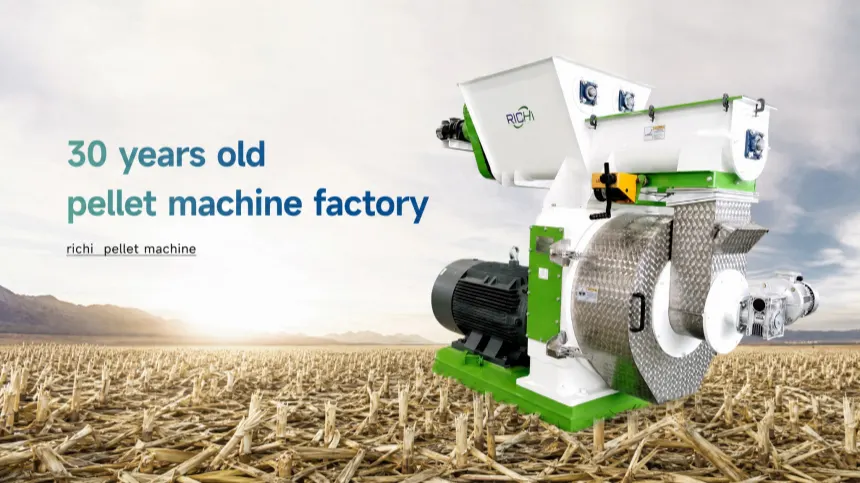
This article looks at corn stalk pelleting from a South African perspective. It covers the residue resource, the challenges of processing it, the economics of production, and what farmers, cooperatives, and project developers should consider before investing.
The Residue Resource in South Africa
Maize is the largest grain crop in South Africa, grown mainly in the Free State, North West, Mpumalanga, and KwaZulu-Natal provinces. After harvest, the stalks and leaves remain in the field. Some of this residue is grazed by livestock. Some is incorporated into the soil. Some is burned.
The amount available for energy use depends on how much can be removed without harming soil health. Sustainable removal rates vary by soil type, rainfall, and farming practice. In drier regions, removing too much residue increases erosion risk and reduces organic matter. In wetter regions, more can be removed without long-term damage.
Collection is the first practical barrier. Corn stalks are bulky and low in density. Baling, loading, and transport all cost money. The further the material has to travel, the higher the cost per ton. This favors pelleting operations located close to the fields.
Seasonality is the second barrier. Maize harvest happens over a few months. A pelleting plant that runs year-round needs enough storage to last through the off-season. That means covered storage, which adds capital cost.
Competition for residue is the third barrier. In some areas, stalks are already used for livestock feed or bedding. Removing them for energy use may not be economically or socially acceptable. Project developers need to understand local use patterns before committing.
Why Corn Stalks Are Difficult to Process
Corn stalks are not wood, but they behave similarly in a pellet mill. They contain lignin, which acts as a natural binder when heated. They also contain silica, which is abrasive and wears dies and rollers faster than most feed ingredients.
Moisture is the biggest technical issue. Stalks are usually baled at 15 to 20 percent moisture. Pelleting works best at around 12 to 15 percent. That means most material has to be dried before it enters the mill. Drying consumes energy, which adds cost.
Particle size is the second issue. Corn stalks are long and tough. They must be ground to a consistent size before pelleting. Grinding consumes energy and wears hammers. Fine grinding improves pellet quality but costs more.
Die wear is the third issue. Abrasive material wears dies quickly. A die that lasts for months on feed ingredients may wear out in weeks on corn stalks. This is not a machine defect. It is the nature of the material. The practical response is to choose wear-resistant dies and budget for more frequent replacement.
Flowability is the fourth issue. Ground corn stalks do not flow as smoothly as grain. They can bridge in hoppers and stall in feeders. Material handling equipment has to be designed for the material, not adapted from feed systems.
What a Pellet Line Looks Like
A corn stalk pellet line includes more than the mill. Each piece of equipment affects the others.
Collection and baling come first. Round or square bales are loaded and transported to the processing site.
Storage follows. Bales are stacked under cover or in well-drained rows. Moisture control during storage is critical.
Grinding comes next. A hammer mill reduces stalks to a consistent particle size. Screen size and hammer configuration affect the final product and the energy cost.
Drying is required if moisture is above the target range. Rotary dryers are common in larger lines. The heat source can be biomass, gas, or another fuel.
Pelleting is the core step. The corn stalk pellet making machine presses ground material through a die to form dense pellets. Ring die mills are usually preferred for biomass because they handle high volumes and produce more uniform pellets.
Cooling follows. Fresh pellets are hot and moist. They must be cooled before storage or bagging. A counterflow cooler is standard.
Screening and bagging come last. Fines are separated and recycled. Finished pellets are bagged or loaded in bulk.
Each step has to be sized to match the others. A line with a large mill but insufficient drying capacity will run below capacity. A line with excess grinding capacity but a small mill will waste energy.
The South African Context
Several factors shape how corn stalk pelleting fits into the South African context.
Energy prices are the first. Eskom tariffs have risen sharply over the past decade, and load shedding has made grid power unreliable for many businesses. This creates demand for alternative fuels, including biomass pellets. It also increases the cost of running an electrically powered pellet line.
Coal prices are the second. South Africa has abundant coal, and coal remains cheap compared to many alternatives. That makes it harder for biomass pellets to compete on price alone in industrial applications. Biomass pellets compete more easily where emissions regulations, sustainability targets, or logistics favor them.
Logistics is the third. South Africa has a well-developed road network, but transport costs are significant. Biomass pellets have higher density than raw stalks, which improves transport economics. That is one reason pelleting makes sense: it reduces the cost of moving energy from where it is produced to where it is used.
Labor is the fourth. Unemployment is high, and labor-intensive operations can be socially valuable. But labor costs still affect the economics of pelleting. Automation reduces labor but requires capital.
Policy is the fifth. Renewable energy policy, carbon taxes, and incentives for biomass use all affect the market. Developers should track these signals because they can shift the economics quickly.
Equipment Selection for Local Conditions
Equipment selection in South Africa has to account for local conditions, not just nameplate capacity.
Power supply is the first consideration. A pellet mill sized for a stable grid may not perform well where load shedding is common. Backup generators or diesel-driven mills may be necessary. That adds cost but keeps production running.
Climate is the second. Some regions are hot and dry, others humid. Moisture management has to be designed for local conditions. In humid areas, drying capacity needs to be larger. In dry areas, dust control becomes more important.
Feedstock variability is the third. Corn stalks vary by variety, harvest timing, and storage conditions. Equipment that performs well on one batch may struggle on another. Flexibility in die selection and process control helps.
Support and spare parts are the fourth. A machine that cannot be repaired locally becomes a liability. Buyers should confirm that dies, rollers, and other wear parts are available in the region, or that the supplier can ship them quickly.
For projects that want to compare equipment options before committing, a corn stalk pellet making machine for sale in South Africa is available through suppliers who serve the region. Reviewing specifications, support arrangements, and lead times is part of the decision.
pellet maker is a broad category that covers equipment for biomass and feed applications. For projects that need a complete line rather than a single unit, reviewing how a supplier structures projects and supports customers is a practical step before committing.
Economics of Corn Stalk Pelleting in South Africa
The economics of corn stalk pelleting in South Africa depend on several factors.
Feedstock cost is the first. If stalks are available on-farm or from nearby farms at low cost, the economics improve. If they must be purchased and transported long distances, the cost rises.
Energy cost is the second. Drying and pelleting both consume energy. In South Africa, electricity prices are high and rising, which makes energy efficiency important. Using biomass as a heat source for drying can reduce cost, but it requires investment.
Labor cost is the third. Labor is relatively affordable in South Africa compared to many developed markets, which can make labor-intensive operations viable. But labor still adds to the cost per ton.
Capital cost is the fourth. A complete pellet line requires significant investment. Financing options, incentives, and payback periods all affect whether a project is viable.
Product value is the fifth. Corn stalk pellets can be sold as fuel, used on-site, or sold as bedding. The value depends on the market. Industrial buyers usually pay less than residential buyers but purchase larger volumes.
Market Development
The biomass pellet market in South Africa is less developed than in Europe, but it is growing. Several factors drive demand.
Industrial heat is one. Some industries use biomass boilers to reduce coal consumption and emissions. Corn stalk pellets can be part of that mix, though they compete with wood pellets and other biomass.
Residential heating is another. In colder regions, households use wood, coal, or electricity for heating. Biomass pellets offer an alternative, but adoption depends on stove availability and fuel price.
Agricultural use is a third. Some farms use pellets for heating or drying. On-farm use avoids transport costs and market risk.
Export is a fourth. South Africa has ports and logistics infrastructure. Exporting pellets to Europe or Asia is possible, but it requires meeting quality standards and competing on price with established suppliers.
Common Mistakes in Project Planning
Several mistakes appear repeatedly in biomass pelleting projects.
Underestimating moisture is the most common. Projects that do not plan adequate drying capacity cannot reach rated output.
Ignoring die wear is another. Corn stalks are abrasive. Dies wear faster than in feed applications. Budgets that assume feed-level die life are unrealistic.
Underestimating material handling is a third. Corn stalks are bulky and difficult to move. Conveyors, bins, and feeders have to be designed for the material.
Skipping market research is a fourth. Producing pellets is not the same as selling them. Projects that do not understand their market end up with inventory they cannot move.
Overbuilding is a fifth. Larger is not always better. A line that is too big for the available feedstock will run below capacity and lose money.
What a Realistic Project Looks Like
A realistic corn stalk pelleting project in South Africa starts with feedstock. It confirms that enough material can be collected at acceptable cost. It plans storage and drying for real-world moisture conditions. It selects a mill and die matched to the material. It budgets for wear parts and maintenance. It identifies a market before production begins.
The equipment is important, but it is not the starting point. The starting point is the material and the system that delivers it to the mill. Projects that understand this are more likely to succeed than those that focus on the machine alone.
Looking Ahead
Interest in agricultural residue pelleting is growing in South Africa, driven by energy costs, emissions concerns, and the search for new farm income streams. Corn stalks are one of the most abundant residues available, and pelleting offers a way to turn them into a product with real value.
The technology is established. The equipment is available. What separates successful projects from unsuccessful ones is planning. Material supply, moisture control, storage, die selection, maintenance, and market access all have to be addressed before the first pellet is made.
For farmers and project developers willing to do that work, corn stalk pelleting can be a practical addition to an agricultural operation. For those who skip the planning, the machine will sit idle while the problems pile up around it.