
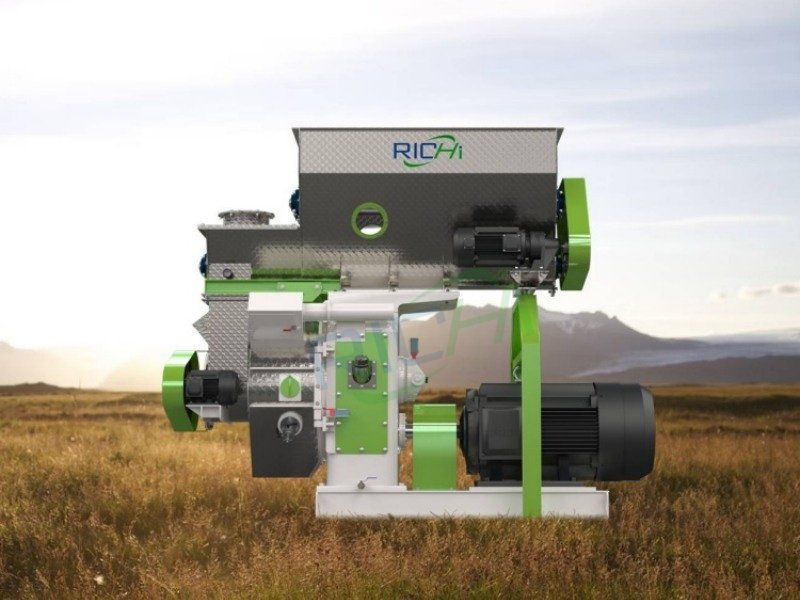
For a large industrial company, entering biomass fuel production may involve substantial investment, engineering teams, automated facilities, and dedicated logistics networks.
For a small agricultural enterprise, the path can look very different.
A farm cooperative, grain processor, livestock business, or rural entrepreneur may not need a huge factory at the beginning. The more realistic strategy can be to use locally available residues, select manageable processing capacity, build a nearby customer base, and expand after the business proves itself.
This approach is especially relevant in agricultural areas where corn stalks, rice straw, wheat straw, or other by-products are abundant but underutilized.
Start with What Is Already Available
Small businesses often have one major advantage over large industrial operators: they already sit close to the raw material.
A farmer understands the seasonal supply of corn stalks. A rice-processing operation knows when straw becomes available. A sugar-processing facility already has access to bagasse.
This local knowledge can reduce one of the biggest challenges in biomass projects: raw-material sourcing.
A corn stalk pelletizer may therefore be more than a machine for producing fuel. It can serve as a tool for adding value to an existing agricultural material stream.
Local Supply Can Support a Stronger Business Model
Transportation is one of the most important variables in biomass economics.
A small business does not necessarily need to compete with large industrial pellet manufacturers serving distant markets. It may be more effective to establish a local supply chain.
For example:
Local farms → residue collection → nearby processing → local fuel customers
This model reduces the distance that low-density material needs to travel before processing.
The finished pellet has a higher bulk density, making regional distribution more practical.
Why Starting Small Can Be Sensible
New businesses face uncertainty.
They may not yet know:
- How much biomass can be collected consistently
- What customers will pay
- Which pellet diameter is preferred
- How much labor the process requires
- How seasonal supply affects production
- Which maintenance parts need frequent replacement
Starting with a manageable production scale can reduce these uncertainties.
A company considering a 3-4 T/H rice straw pellet machine for sale should therefore compare the quoted output with actual local demand rather than assuming that bigger capacity automatically means higher profit.
A lower utilization rate can have a major impact on equipment economics.
Build Around the Market, Not the Machine
One of the most common mistakes in new processing businesses is to produce a product first and look for customers later.
A better approach is to talk with potential users before investment.
Ask local businesses:
- What fuel do you currently use?
- How much do you consume each month?
- What pellet specifications do you need?
- What delivery distance is acceptable?
- Do you buy by bag or in bulk?
- What quality problems have you experienced with other biomass fuels?
The answers can influence everything from pellet diameter to packaging method.
A Small Production Line Still Needs Good Process Control
Small does not mean basic.
Even a modest operation benefits from a well-designed workflow.
A typical process may involve:
Material receiving → size reduction → moisture adjustment → pelletizing → cooling → screening → packing
Each stage should match the next.
For example, if the biomass enters the pelletizing section with inconsistent particle size, output may become unstable. If cooling is inadequate, storage problems may occur. If screening is omitted, excess fines can affect customer satisfaction.
The scale may be smaller, but the process logic remains the same.
What Raw Materials Offer Opportunities?
A small operation does not have to depend on one residue.
Depending on location, it may have access to:
- Corn stalks
- Rice straw
- Wheat straw
- Barley straw
- Hay residues
- Cotton stalks
- Bagasse
- Other agricultural fibers
The key is to identify materials that are locally abundant and economically collectable.
A plant that can process more than one material may operate for more months of the year, but this flexibility should be engineered carefully.
How Seasonal Supply Affects Small Businesses
Seasonality can create both opportunity and risk.
During harvest, large amounts of biomass may become available quickly. This can reduce acquisition costs, but storage becomes essential.
A business may decide to collect and store residues during the harvest period and pelletize them gradually as customer orders come in.
Another approach is to process continuously during the harvest season and store finished pellets for later delivery.
The best strategy depends on storage costs, working capital, labor, and local demand.
Selling to Nearby Industries
Small biomass producers often have better opportunities in nearby markets.
Potential customers can include:
Agricultural operations
Farms and greenhouses may use biomass fuels for heating or drying applications.
Food processors
Food-processing businesses can require thermal energy and may be interested in locally available renewable fuels.
Small industrial plants
Some regional manufacturers use solid fuels for boilers or thermal processing.
Fuel distributors
A local distributor may provide a broader customer network than the producer can build independently.
Local partnerships can be especially valuable during the early stages of a business.
Quality Creates Repeat Customers
The first order may come from price.
The second order usually depends on performance.
If pellets vary significantly in size, break apart easily, contain too many fines, or create unexpected combustion problems, customers may switch suppliers.
Small producers therefore have a powerful competitive advantage when they deliver consistent quality.
This requires attention to raw-material preparation, moisture control, pelletizing conditions, cooling, and screening.
Equipment Selection Should Include the Future
A small enterprise should avoid paying for unnecessary capacity, but it should also avoid selecting equipment that has no room for growth.
One practical approach is to design the facility so that additional processing units can be added later.
For example, future expansion might include:
- More pelletizing capacity
- Larger conveyors
- Improved drying
- Automated packing
- Larger storage
- Additional raw-material preparation
This creates a path from small production to a larger regional business.
Why Supplier Support Matters for New Operators
Experienced industrial operators may already have maintenance teams and process engineers.
Small businesses often do not.
For this reason, supplier support can be especially important. Buyers should understand installation assistance, operator training, spare parts, troubleshooting procedures, and technical communication before purchasing equipment.
When comparing suppliers, checking whether the quoted equipment is a standalone machine or part of a broader processing solution can make a major difference.
Those researching available models can use pellet mill for sale listings as a starting point, but product comparison should always go beyond price and motor power.
The Economics of a Small Operation
A simple financial model should include:
Raw-material acquisition
Collection, loading, transportation, and storage.
Processing
Electricity, labor, drying, maintenance, and consumables.
Packaging
Bags, pallets, labels, and handling.
Distribution
Transportation to customers.
Revenue
The realistic selling price multiplied by the volume actually sold.
The key word is actually.
A theoretical production capacity does not create revenue unless customers are available.
From Local Experiment to Regional Business
A small biomass enterprise does not have to remain small.
A successful development path could look like this:
Phase 1: Use local residues and sell to a few nearby customers.
Phase 2: Improve production consistency and storage.
Phase 3: Expand raw-material collection.
Phase 4: Add equipment or production capacity.
Phase 5: Build a broader regional distribution network.
This gradual approach allows the business to grow alongside market knowledge.
Research Before Spending
The best preparation is not simply collecting equipment quotations.
It is understanding the entire operating environment.
Study local residue availability. Talk to potential fuel customers. Compare transportation costs. Analyze seasonal storage needs. Identify competing fuel products. Review common pellet specifications.
Technical information can also help clarify what equipment is needed for different feedstocks. Readers who want to compare processing concepts and machine configurations can look at this website for additional material before making a final decision.
The Opportunity for Rural Businesses
Biomass pellet production can be especially interesting for rural enterprises because it connects two local resources: agricultural residues and local energy demand.
Instead of allowing residues to remain underused, a small company can organize collection, process the material, and supply a product that customers already understand.
The business does not need to compete on a global scale to become valuable. A reliable local fuel supplier can build a sustainable operation through proximity, consistent quality, and good service.
Final Thoughts
Small agricultural enterprises should approach biomass pellet production as a business development project, not simply an equipment purchase.
(Related Post: https://biomasspelletizer.com/straw-pellet-production-line/)
The most important factors are local raw material availability, realistic production capacity, manageable logistics, customer demand, product quality, and the ability to expand when the market proves strong.
When those elements are aligned, agricultural residues can become a practical source of additional income.
The broader lesson is equally important: sustainable energy does not always require a massive industrial facility. Sometimes it starts with a local material that has been overlooked for years and a business willing to turn that material into something useful.
With careful planning, even a small agricultural enterprise can become part of a more efficient and circular biomass economy.