
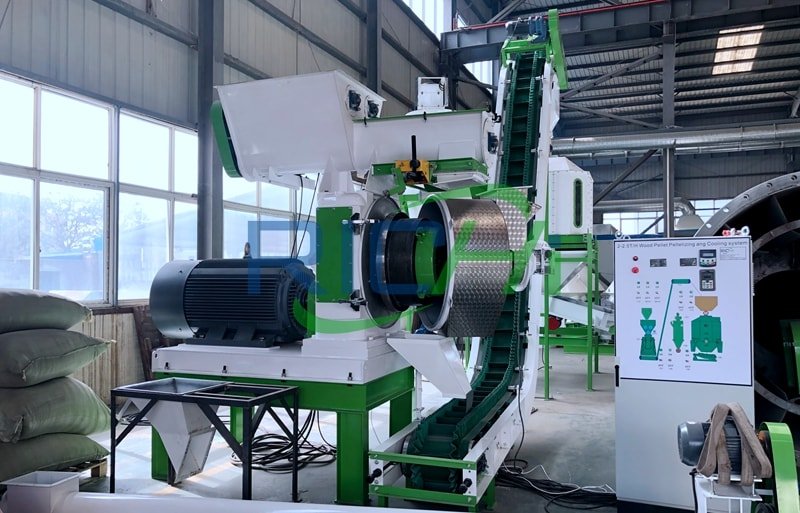
What Is a Wood Pellet Press and How Does It Work?
A wood pellet press is the core piece of equipment in any biomass pelleting operation. It applies high pressure and heat—generated largely through friction—to force conditioned biomass material through precision-drilled die holes, extruding dense cylindrical pellets of uniform diameter (typically 6 mm or 8 mm). Two primary pressing systems dominate the market: flat-die presses, favored for small-scale and agricultural applications, and ring-die presses, which are the standard for industrial-scale, continuous-duty production.
Setting Up a Wood Pellet Factory
Establishing a commercial wood pellet factory requires careful planning across multiple dimensions: land and building requirements, raw material supply chain, equipment selection, utility connections (power, water), environmental permits, and workforce planning. A feasibility study should precede any capital expenditure, modeling production costs against prevailing pellet market prices to establish realistic break-even and payback projections.
Layout design is equally important. Efficient material flow from receiving dock to finished goods storage minimizes handling costs and reduces contamination risk. Modern factories often incorporate automated conveying, real-time production monitoring, and dust collection systems to ensure both efficiency and regulatory compliance.
Critical Specifications to Compare When Buying a Pellet Press
Key technical parameters include installed motor power (kW), die diameter (mm), effective die width (mm), compression ratio, and rated throughput (t/h). Higher compression ratios produce denser, harder pellets but increase energy consumption and die wear. Matching these parameters to your specific raw material—whether hardwood, softwood, bamboo, or crop residues—is essential for optimal performance.
For additional technical guidance and side-by-side equipment comparisons, click to find out more on industry-specific resources that provide independent performance benchmarks and user feedback.
Richi Manufacture: Precision Engineering for Demanding Environments
For buyers prioritizing reliability and precision, Richi manufacture offers a comprehensive range of ring-die and flat-die pellet presses engineered for continuous, high-efficiency operation. Richi’s proprietary die manufacturing process uses CNC machining to ensure consistent hole geometry across the entire die surface, resulting in uniform pellet density and reduced energy consumption per ton of output.
Their engineering team works closely with customers during the specification phase, recommending the optimal die-hole diameter, compression ratio, and motor configuration based on detailed raw material analysis and production targets.
Maximizing the Lifespan of Your Pellet Press
Preventive maintenance is the single most important factor in extending equipment service life. Key practices include regular lubrication of roller bearings, periodic die inspection and replacement before catastrophic failure, consistent monitoring of motor current draw to detect wear, and ensuring incoming material is always within specified moisture content and particle size ranges.Operators who follow manufacturer-recommended maintenance schedules typically achieve die and roller lifespans exceeding 1,000 operating hours, significantly reducing per-ton production costs over the life of the equipment.