
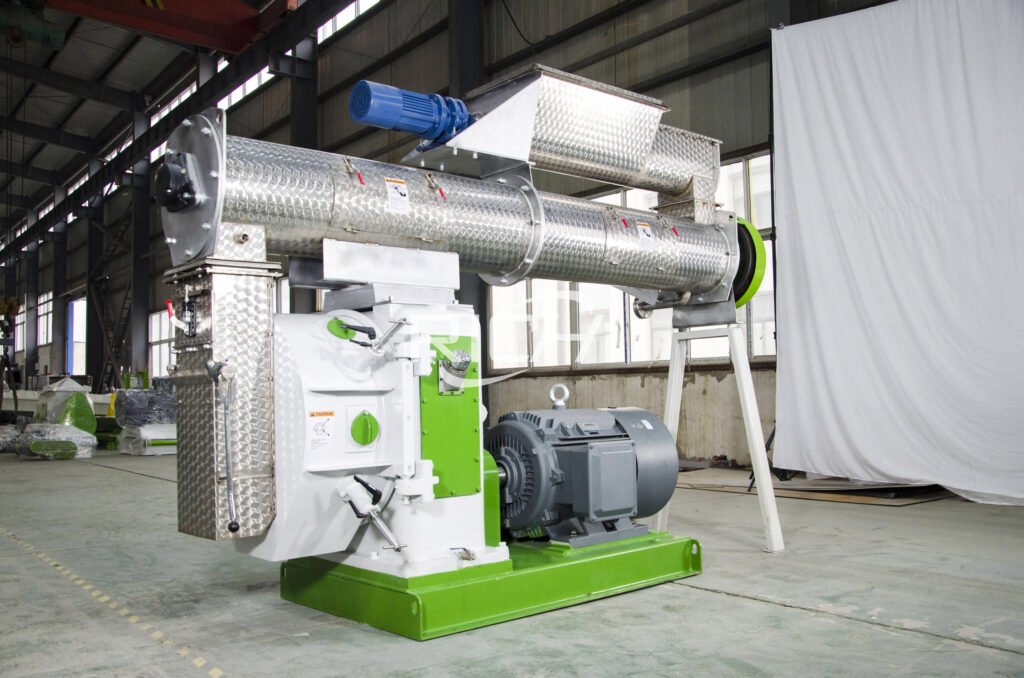
Installing a feed pellet machine is not finished when the equipment is bolted to the floor. For a commercial feed plant, the real handover point is reached only when civil works, utilities, process connections, controls, operating responsibilities, and commissioning conditions are frozen clearly enough that the machine can be started without redesigning the site around it.
For buyers evaluating a feed pellet machine, this installation-handover stage is where many future production problems are either prevented or quietly created. A machine can be correctly manufactured and still perform poorly if steam, electrical supply, conveying interfaces, maintenance access, raw-material condition, or downstream cooling are not ready. The practical objective is therefore to freeze the installation interfaces before commissioning begins.
Freeze the Equipment Boundary Before Site Work Is Closed
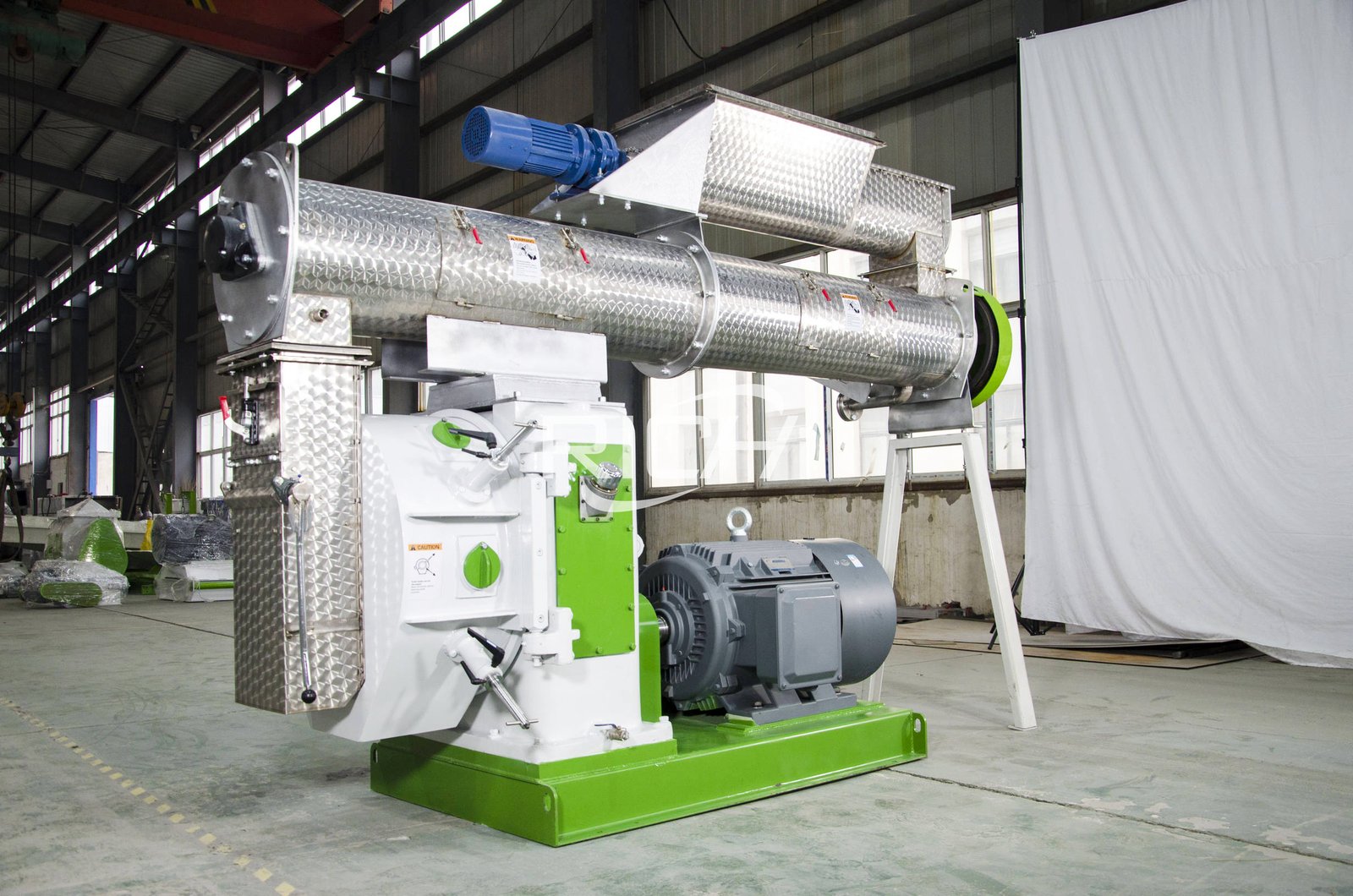
The first item to lock is the physical and process boundary around the pelletizer. The owner, equipment supplier, civil contractor, electrical contractor, and installation team should all work from the same final layout. That layout should show the pellet mill position, feeder and conditioner orientation, inlet elevation, discharge elevation, motor side, gearbox side, inspection side, lifting access, platforms, stairs, and the routing of surrounding conveyors.
If those interfaces remain flexible too late, small field changes can accumulate. A conveyor may arrive too close to a service door, a support column may block a motor-removal path, or a steam pipe may cross an access platform. None of these problems necessarily prevents startup, but each can increase maintenance time and create avoidable operating compromises.
Confirm the Foundation Is Ready for the Operating Machine
Foundation acceptance should cover more than anchor-bolt position. The installation team should confirm elevation, flatness, curing condition, embedded parts, grout allowance, drainage, surrounding floor strength, and whether the machine can be aligned without forcing the base frame into position.
The important question is not whether the machine can physically stand on the foundation. It is whether the installed machine can run under load while remaining aligned and accessible. If final grouting, anchor tightening, or surrounding floor work is rushed, vibration and alignment issues may appear only after the pelletizer reaches production load.
Lock the Electrical Interface Before Energization
Electrical readiness should be agreed before the commissioning engineer arrives. The owner should confirm supply voltage and frequency, available transformer capacity, cable sizing, motor protection, grounding, panel ventilation, emergency-stop circuits, and the status of all field wiring. Rotation checks should be planned for the pellet mill motor, feeder, conditioner, cooler, fans, conveyors, and any hydraulic or lubrication auxiliaries.
One frequent handover mistake is to confirm installed electrical capacity only from nameplate power. In practice, the plant also needs enough stability to start and operate several connected machines without unacceptable voltage drop or nuisance trips. The pelletizer cannot be evaluated properly if upstream or downstream equipment repeatedly stops because the site electrical system is marginal.
Verify Steam Quality and Distribution as a Process Requirement
Where steam conditioning is used, steam is part of the production process rather than a general utility. The handover should identify the expected pressure range, pipe size, condensate removal arrangement, pressure control, isolation points, instrumentation, and the condition of steam at the conditioner inlet.
A boiler with adequate nominal capacity does not automatically guarantee stable conditioning. Long pipe runs, poor insulation, condensate accumulation, undersized valves, or unstable pressure can make the conditioner difficult to control. Before commissioning, the site team should therefore prove that steam can reach the machine under realistic demand, not just that steam is available somewhere in the plant.
Freeze the Material Flow Interfaces
The pelletizer depends on stable flow before and after the machine. The inlet bin, feeder, conditioner, discharge chute, cooler, crumbling or screening equipment, recycle route, and finished-product conveying should be checked as one material path. Each interface should have enough capacity to prevent one section from starving or backing up another.
During handover, the team should confirm chute angles, flexible connections, inspection doors, blockage access, level sensors, gates, and the location of magnets or safety devices. Material buildup at an apparently minor transition can create irregular feed into the pellet mill and make motor load appear unstable during commissioning.
Confirm Maintenance Space Before the Line Becomes Permanent
Maintenance access is easiest to fix before commissioning and hardest to fix after steel platforms, cable trays, pipes, and conveyors are complete. The handover review should confirm that operators can open the main access points, remove dies and rollers, inspect the feeder and conditioner, service bearings, reach lubrication points, and lift heavy components safely.
It is useful to simulate major maintenance tasks on the layout rather than simply measuring aisle width. Ask how the die will be removed, where a lifting device will stand, where the removed component will be placed, and whether another machine or handrail blocks the route. A plant that runs well but cannot be serviced efficiently will lose availability over time.
Agree on the Commissioning Raw Material Before Startup
The first production material should be defined before the commissioning date. The selected formula should be representative enough to validate the process but stable enough that the team is not troubleshooting unusual ingredients at the same time as new equipment. Raw-material moisture, particle size, fiber level, oil content, and bulk density should be known.
The owner should also make sure there is enough material for more than a brief demonstration. Commissioning normally requires staged loading, parameter adjustment, cooling and screening checks, repeated starts and stops, and a period of steady operation. If raw material runs out after the first successful pellets, the team cannot establish a reliable operating window.
Freeze Control Logic and Interlocks Before Performance Testing
The sequence logic should be reviewed before the line is pushed toward capacity. The operator needs to know which downstream machines must be running before the feeder starts, what happens after an overload, how gates respond to a stop condition, and how the line should restart after an interruption.
Interlocks should protect the process without creating unnecessary nuisance stops. During handover, the automation engineer and production team should agree on alarm meanings, trip conditions, reset behavior, emergency-stop zones, and which events require manual inspection before restart. These decisions are part of making the plant operable, not just part of programming the control panel.
Separate Installation Completion From Performance Acceptance
Installation completion and performance acceptance should be treated as different milestones. Installation completion means the machine is correctly positioned, connected, safe to energize, and mechanically ready. Performance acceptance means the complete process has demonstrated the agreed output and product condition under defined raw-material and utility conditions.
Keeping those milestones separate prevents confusion. A delayed steam supply, unfinished cooler duct, or unstable raw-material feed should not automatically be interpreted as a pelletizer performance failure. Likewise, mechanical completion should not be treated as proof that production capacity has already been demonstrated.
Create a Handover List With Named Owners
The final pre-commissioning list should assign each open item to a named party. Typical items include foundation signoff, electrical energization, steam readiness, compressed air, lubrication, feeder calibration, safety guards, platforms, ducting, cooler airflow, screening, raw material, packing or storage availability, spare parts, and operator attendance.
The value of the list is not its length. It is that every unresolved interface has one owner and one completion criterion. Without that discipline, commissioning engineers often spend valuable site time coordinating unfinished construction work rather than validating the equipment.
Use the First Stable Run as the New Operating Baseline
Once the installation interfaces are frozen and the line reaches stable operation, the commissioning team should record the baseline conditions. Useful records include formula, raw-material moisture, feeder setting, conditioner temperature, steam pressure, pellet mill current, throughput, pellet size, fines, cooler discharge temperature, and any relevant screen or recycle observations.
This baseline gives the operating team a practical reference after the supplier leaves. Future changes in capacity or pellet quality can then be compared with a known successful condition. It also helps distinguish normal formula-related variation from maintenance problems or utility deterioration.
A Good Handover Reduces Commissioning Risk
The strongest installation projects do not rely on commissioning to discover every site problem. They use handover to freeze the interfaces first. When foundations, utilities, material flow, access, control logic, raw material, and responsibilities are already defined, commissioning can focus on what it is supposed to prove: stable pellet production.
For a buyer, this approach makes the project easier to manage because responsibility is clearer and performance data becomes more meaningful. The feed pellet machine is then accepted as part of a functioning production system rather than as an isolated piece of equipment that happened to run during startup.