
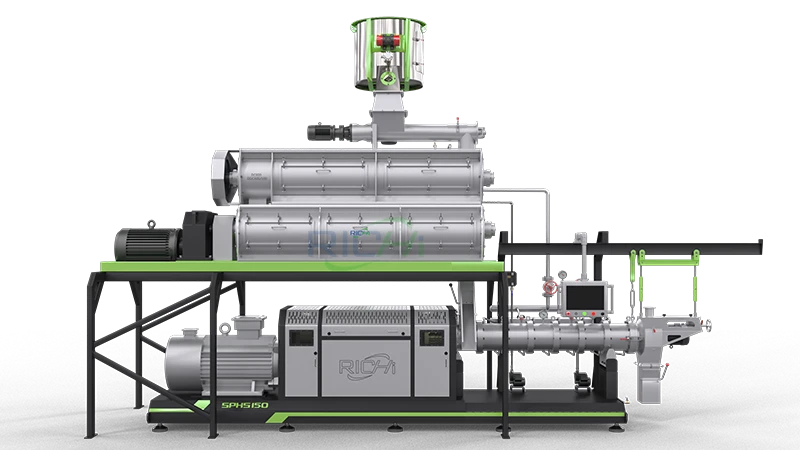
The aquaculture industry has experienced rapid growth in recent years, creating increasing demand for high-quality fish feed that can support efficient growth, improve feed utilization, and reduce environmental impact. As feed represents one of the largest operating costs in fish farming, optimizing the fish feed production process has become essential for improving profitability and maintaining competitive advantages.
Fish feed extrusion is one of the most advanced technologies used in modern aquafeed manufacturing. Compared with traditional pelletizing methods, extrusion provides better control over feed structure, digestibility, buoyancy, and water stability. However, achieving consistent extrusion performance requires careful optimization of multiple factors, including raw material preparation, formulation design, moisture control, temperature management, equipment settings, and post-processing operations.
A high-performance fish food extruder machine is the core equipment in the extrusion process. By accurately controlling pressure, temperature, and mechanical shear, it transforms mixed feed ingredients into high-quality floating, sinking, and slow-sinking pellets. Optimizing the extrusion process not only improves feed quality but also increases production efficiency, reduces energy consumption, and ensures stable operation of the entire fish feed production line.
Understanding the Fish Feed Extrusion Process
Fish feed extrusion is a complex process that combines mechanical and thermal treatments to modify raw materials and produce stable feed pellets. During extrusion, the prepared feed mixture passes through an extrusion chamber where it is compressed and heated by rotating screws.
The main stages of the extrusion process include:
- Raw material preparation
- Grinding
- Ingredient mixing
- Conditioning
- Extrusion
- Drying
- Cooling
- Screening
- Oil coating
- Packaging
Each stage influences the final quality of fish feed. A small adjustment in one processing parameter can affect pellet expansion, density, digestibility, and water stability.
Therefore, optimizing the extrusion process requires a systematic approach that considers both equipment performance and feed formulation.
(Related machine: industrial aqua feed plant)
1. Optimize Raw Material Selection and Preparation
The quality of raw materials directly affects extrusion performance. Different ingredients have different chemical and physical properties, which influence how they behave under heat and pressure.
Common raw materials used in fish feed production include:
- Fish meal
- Soybean meal
- Wheat flour
- Corn
- Rice bran
- Fish oil
- Vegetable protein sources
- Vitamins and minerals
Control Raw Material Quality
High-quality ingredients should have:
- Stable nutritional composition
- Low moisture variation
- Minimal contamination
- Appropriate storage conditions
Poor-quality raw materials may cause inconsistent extrusion results and reduce feed performance.
Improve Particle Size Through Grinding
Grinding is an important preparation step before extrusion. Smaller and more uniform particles improve:
- Ingredient mixing
- Moisture absorption
- Starch gelatinization
- Pellet surface quality
For floating fish feed production, fine grinding is especially important because it helps create a more uniform internal structure during extrusion.
A suitable grinding process allows the extruder to operate more efficiently and improves the consistency of final pellets.
2. Optimize Fish Feed Formula Design
Feed formulation has a significant impact on extrusion performance. A well-designed formula must balance nutritional requirements with processing characteristics.
Important formula factors include:
Starch Content
Starch plays an essential role in extrusion because it provides binding and expansion properties.
During extrusion, starch absorbs water and gelatinizes under high temperature and pressure. Proper starch gelatinization helps create:
- Stronger pellets
- Better floating ability
- Improved digestibility
However, excessive starch may reduce nutritional balance, especially for carnivorous fish requiring high protein levels.
Protein Content
Protein is the most important nutrient for fish growth, but high-protein formulas can influence extrusion behavior.
A proper balance between protein and starch helps achieve both nutritional value and good pellet quality.
Fat Content
Fat improves feed energy value and palatability, but excessive oil may interfere with pellet expansion.
Therefore, oil addition is often controlled carefully or applied after extrusion through a coating system.
Optimizing the formula before production helps reduce extrusion problems and improves feed quality.
3. Control Moisture Content During Extrusion
Moisture is one of the most critical parameters affecting extrusion performance.
During extrusion, water helps:
- Soften ingredients
- Improve material flow
- Transfer heat
- Promote starch gelatinization
The correct moisture level allows the material to pass smoothly through the extrusion chamber.
Problems Caused by Low Moisture
Insufficient moisture may result in:
- Excessive friction
- Higher energy consumption
- Poor expansion
- Uneven pellet structure
Problems Caused by Excessive Moisture
Too much moisture may lead to:
- Reduced floating ability
- Lower pellet hardness
- Increased drying costs
To optimize production, manufacturers should adjust moisture levels according to raw materials, feed formulas, and extrusion equipment.
Advanced extrusion systems can provide better moisture control through automatic conditioning and steam injection.
4. Optimize Conditioning Before Extrusion
Conditioning is an important preparation stage before the feed mixture enters the extruder.
During conditioning, water and steam are added to improve material properties. Proper conditioning helps:
- Increase moisture uniformity
- Improve starch gelatinization
- Reduce mechanical stress
- Enhance extrusion stability
A longer conditioning time often allows ingredients to absorb moisture more evenly.
For commercial fish feed production, using advanced conditioners can significantly improve extrusion efficiency and pellet consistency.
5. Adjust Extrusion Temperature Properly
Temperature control is essential for achieving high-quality fish feed.
During extrusion, heat causes important changes such as:
- Starch gelatinization
- Protein modification
- Reduction of anti-nutritional factors
Low Temperature Problems
If the temperature is insufficient:
- Starch may not gelatinize completely
- Pellets may have poor binding
- Digestibility may decrease
Excessive Temperature Problems
If the temperature is too high:
- Sensitive nutrients may be damaged
- Feed quality may decline
- Energy consumption may increase
Therefore, manufacturers should maintain suitable temperature conditions based on feed formulas and production goals.
A modern fish food extruder machine allows precise temperature monitoring and adjustment, helping operators maintain stable extrusion conditions.
https://richipelletizer.com/wet-type-fish-feed-extruder
6. Control Screw Speed and Extrusion Pressure
The screw system is the heart of the extruder. It controls material movement, compression, mixing, and shear.
Screw Speed
Screw speed affects:
- Material residence time
- Production capacity
- Degree of mechanical processing
Higher screw speed increases output but may reduce processing time.
Lower screw speed increases residence time but may reduce production efficiency.
Finding the correct balance helps achieve optimal pellet quality.
Extrusion Pressure
Pressure determines pellet expansion and density.
Proper pressure control helps produce:
- Uniform pellets
- Stable floating performance
- Good mechanical strength
Incorrect pressure may result in poor expansion or unstable pellet formation.
7. Select the Right Die Design
The die determines the shape and size of the final fish feed pellets.
Important die factors include:
- Hole diameter
- Hole length
- Number of holes
- Die material quality
Different fish species require different pellet sizes.
For example:
- Small pellets are suitable for juvenile fish
- Medium pellets are suitable for growing fish
- Larger pellets are suitable for adult fish
The correct die design improves production efficiency and ensures that feed meets the feeding requirements of different species.
8. Improve Cutting System Performance
After extrusion, pellets are cut into specific lengths by a cutting system.
The cutting speed and knife position influence:
- Pellet length
- Appearance
- Uniformity
A well-adjusted cutting system produces pellets with consistent size and better market appearance.
Uneven pellets may affect feeding performance and increase screening losses.
Regular inspection and adjustment of cutting equipment help maintain stable production.
9. Optimize Drying and Cooling Processes
Freshly extruded fish feed contains high moisture and must be properly dried before storage.
Drying Optimization
Effective drying helps:
- Reduce moisture content
- Extend shelf life
- Improve storage stability
However, excessive drying temperatures may affect nutrient quality.
Cooling Optimization
Cooling removes residual heat and stabilizes pellet structure.
Proper cooling prevents:
- Moisture migration
- Pellet deformation
- Quality deterioration
A complete drying and cooling system is essential for maintaining final feed quality.
10. Use Automation to Improve Process Control
Automation plays an increasingly important role in modern fish feed production.
Advanced control systems can monitor:
- Temperature
- Moisture
- Pressure
- Production speed
- Equipment load
Benefits of automation include:
- More stable production
- Reduced human error
- Improved energy efficiency
- Consistent product quality
For large-scale aquafeed plants, automated extrusion systems provide better production management and higher reliability.
11. Maintain Extrusion Equipment Regularly
Equipment condition directly affects extrusion performance.
Regular maintenance should include:
- Checking screw wear
- Inspecting die condition
- Lubricating bearings
- Cleaning processing areas
- Replacing damaged components
A poorly maintained extruder may experience:
- Reduced output
- Higher energy consumption
- Unstable pellet quality
Using high-quality components and following proper maintenance procedures helps extend equipment life and maintain production efficiency.
12. Conduct Continuous Testing and Quality Control
Optimizing extrusion is not a one-time process. Continuous monitoring and testing are necessary to maintain consistent feed quality.
Important quality indicators include:
- Pellet density
- Floating time
- Water stability
- Moisture content
- Nutrient composition
- Pellet durability
By analyzing production data and adjusting processing parameters, manufacturers can continuously improve extrusion performance.
Common Problems in Fish Feed Extrusion and Solutions
Poor Floating Ability
Possible causes:
- Low starch content
- Insufficient temperature
- Excess moisture
- Incorrect pressure
Solutions:
- Adjust formula
- Increase gelatinization efficiency
- Optimize moisture and temperature settings
Uneven Pellet Size
Possible causes:
- Improper die selection
- Incorrect cutting speed
Solutions:
- Adjust die design
- Optimize cutter settings
Low Production Efficiency
Possible causes:
- Poor conditioning
- Incorrect screw speed
- Equipment wear
Solutions:
- Improve preparation process
- Adjust operating parameters
- Maintain equipment regularly
Future Development of Fish Feed Extrusion Optimization
As aquaculture continues to expand, fish feed manufacturers will focus on improving efficiency, sustainability, and product quality.
Future trends include:
- Intelligent extrusion control
- Energy-saving equipment design
- More sustainable raw materials
- Advanced monitoring systems
- Customized feed production
The combination of advanced equipment and optimized processing methods will allow manufacturers to produce higher-quality feed with lower production costs.
(view our website: RICHI Pellet Machine )
Conclusion
Optimizing the fish feed extrusion process requires careful control of multiple factors, including raw materials, feed formulation, moisture, temperature, pressure, screw speed, die design, drying, and equipment maintenance. Each factor plays an important role in determining the final quality and efficiency of aquatic feed production.
A reliable fish food extruder machine provides the foundation for producing high-quality floating and sinking feed by ensuring stable extrusion conditions and precise processing control. When combined with optimized production practices, advanced extrusion technology can improve nutrient utilization, reduce waste, increase productivity, and support the sustainable development of modern aquaculture.
As the demand for efficient aquafeed continues to grow, optimizing fish feed extrusion processes will remain essential for manufacturers seeking to produce competitive, nutritious, and environmentally responsible fish feed products.