
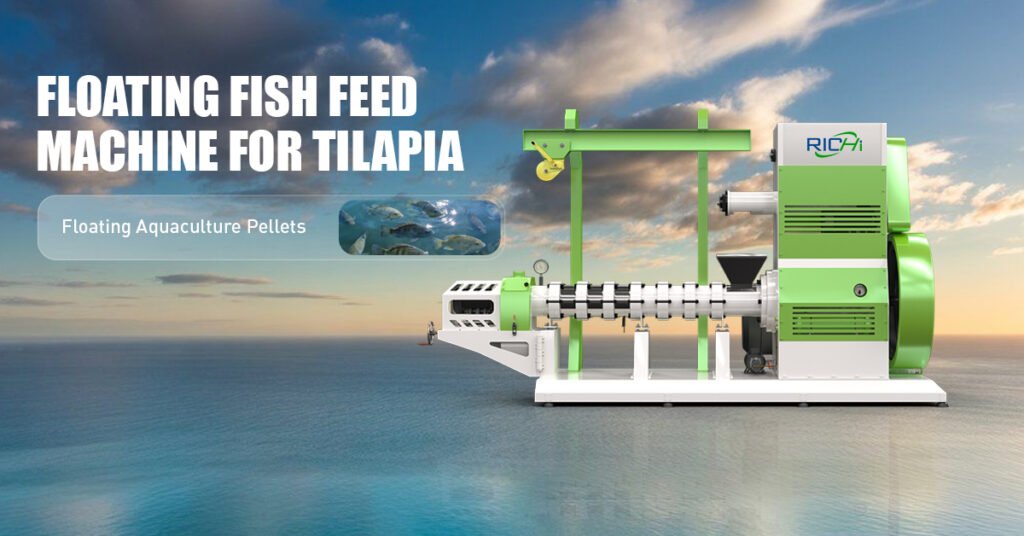
The New Era of Aquatic Feed Production
The aquaculture industry is entering a new stage of development. With increasing global demand for seafood products, fish farmers and feed manufacturers are facing greater pressure to improve efficiency, control costs, and maintain product quality.
Feed is one of the most important elements in successful aquaculture operations. High-quality feed supports faster growth, better survival rates, and improved farming performance. However, producing reliable aquatic feed requires more than simply mixing ingredients together. It requires precise processing technology that can transform raw materials into nutritious and stable pellets.
Modern extrusion technology has become a key solution for improving aquatic feed manufacturing. Through advanced temperature control, pressure adjustment, and moisture management, extrusion equipment helps create feed products with excellent water stability and digestibility.
A professional floating fish feed extruder machine provides manufacturers with the ability to produce floating pellets that meet the needs of different fish species and farming environments.
Why Feed Quality Determines Aquaculture Success
In intensive fish farming, feed efficiency directly affects profitability. Poor-quality feed can lead to several problems, including:
- Slow fish growth
- Increased feed consumption
- Higher farming costs
- Water pollution caused by feed waste
High-quality floating feed helps solve these challenges by improving nutrient utilization and reducing unnecessary losses.
When fish can easily consume feed before it sinks, farmers gain better control over feeding management. This allows them to adjust feeding strategies according to fish behavior and environmental conditions.
For commercial aquaculture operations, improved feed quality means better production results and stronger market competitiveness.
The Working Principle Behind Modern Extrusion Technology
Extrusion processing combines mechanical energy, heat, and moisture to reshape feed ingredients into stable pellets.
(Related Post: https://www.richipelletmill.com/twin-screw-fish-feed-extruder/)
During production, raw materials are first ground and mixed according to the required formula. The mixture then enters the extruder, where pressure and temperature create the desired pellet structure.
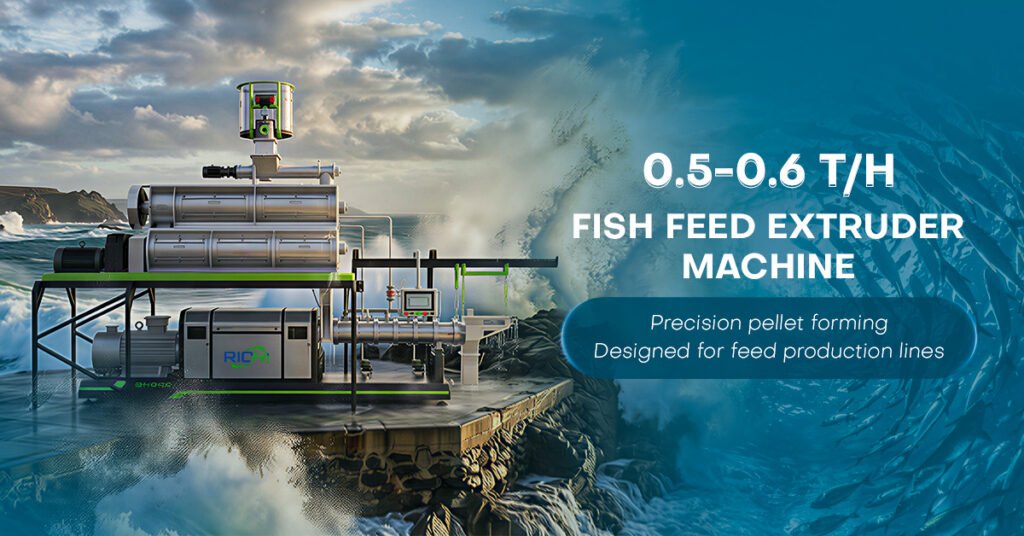
The extrusion process provides several important functions:
Starch Gelatinization
Heat treatment improves starch digestibility, allowing fish to absorb nutrients more efficiently.
Pellet Expansion
Controlled expansion creates floating characteristics, which are essential for many surface-feeding fish species.
Improved Structure
Extrusion strengthens pellet durability, reducing breakage during transportation and feeding.
Because of these advantages, extrusion has become an important technology for producing high-performance aquatic feed.
Selecting the Right Production Capacity for Your Business
Different feed manufacturers have different production goals. A small fish farm may only require a compact system, while a commercial feed factory needs higher-capacity equipment.
Choosing the correct production capacity is important for maintaining efficiency and controlling investment costs.
For companies planning medium-scale production, solutions such as a 2-3 T/H sinking fish feed extrusion machine for sale can provide stable output while supporting growing market demand.
The ideal capacity depends on:
- Target fish species
- Local market size
- Expected sales volume
- Available raw materials
- Future expansion plans
A properly designed production system ensures that equipment performance matches business objectives.
Raw Material Diversity Creates More Market Opportunities
One major advantage of modern extrusion systems is their ability to process various ingredients.
Common aquatic feed materials include:
- Fish meal
- Soybean meal
- Corn
- Wheat
- Rice bran
- Animal protein sources
- Vegetable protein ingredients
- Functional additives
This flexibility allows manufacturers to create different feed formulas for species such as tilapia, carp, catfish, trout, and other aquatic animals.
As the aquaculture market becomes more specialized, customized feed production is becoming increasingly important.
Manufacturers that can quickly adjust formulas and pellet specifications have stronger competitive advantages.
Improving Production Efficiency Through Complete Feed Solutions
A successful aquatic feed factory requires coordination between multiple processing stages.
A typical production line includes:
Raw Material Grinding
Grinding ensures ingredients reach suitable particle sizes for better mixing and extrusion performance.
Mixing
Uniform mixing guarantees that nutrients are evenly distributed throughout the feed.
Extrusion
The extruder shapes the feed and creates the desired floating or sinking characteristics.
Drying and Cooling
Proper drying reduces moisture content and improves storage stability.
Packaging
Final packaging protects feed quality during transportation and storage.
A complete production approach helps manufacturers achieve consistent results and reduce operational problems.
Professional suppliers such as Richi Pellet Mill provide integrated feed processing solutions to support different production requirements.
The Role of Automation in Modern Feed Factories
Automation is becoming increasingly important in feed manufacturing.
Advanced control systems help operators monitor:
- Temperature
- Moisture
- Production speed
- Equipment status
- Material flow
These features improve production stability and reduce manual operation requirements.
For large-scale manufacturers, automated systems can significantly improve productivity while maintaining consistent product quality.
Automation also helps reduce production errors and supports more efficient resource management.
Sustainability Benefits of Advanced Feed Processing
Sustainable aquaculture requires better resource utilization and reduced environmental impact.
Modern extrusion technology contributes to sustainability in several ways:
Lower Feed Waste
Stable pellets reduce nutrient loss in water and improve feed utilization.
Better Resource Efficiency
Improved digestibility means fewer resources are required to achieve the same growth results.
Flexible Ingredient Selection
Extrusion allows manufacturers to explore alternative ingredients and develop more sustainable feed formulas.
These advantages make extrusion technology increasingly valuable for environmentally responsible aquaculture development.
Expanding Opportunities in the Global Aquaculture Market
Aquaculture continues to grow in many regions around the world. Countries in Asia, Africa, South America, and the Middle East are investing in fish farming projects to meet increasing food demand.
This growth creates opportunities for feed manufacturers who can provide reliable, high-quality products.
Investing in modern feed processing technology allows businesses to:
- Increase production capacity
- Improve product consistency
- Reduce operating costs
- Serve more customers
Companies researching advanced feed equipment can explore Richi manufacture solutions to better understand available technologies and production applications.
Important Considerations Before Investing in Feed Equipment
Purchasing extrusion equipment is a long-term business decision. Before choosing a solution, manufacturers should evaluate:
Production Requirements
Determine current demand and future expansion possibilities.
Product Types
Consider whether the factory will produce floating feed, sinking feed, or multiple feed categories.
Equipment Reliability
Stable operation and easy maintenance are important for reducing downtime.
Technical Support
Professional installation and service support help ensure successful operation.
A comprehensive evaluation helps businesses select equipment that delivers long-term value.
Future Trends in Aquatic Feed Manufacturing
The future of aquatic feed production will focus on smarter, cleaner, and more efficient technologies.
Key development trends include:
- Intelligent production control
- Energy-saving equipment
- Sustainable raw materials
- Customized nutrition solutions
- Higher automation levels
As aquaculture becomes more competitive, manufacturers must continue improving production technology to meet changing market requirements.
Those who want to learn more about advanced aquatic feed processing methods can look at this website for additional technical information and industry solutions.
Conclusion
Modern extrusion technology is changing the way aquatic feed is produced by improving pellet quality, production efficiency, and sustainability.
For fish farmers and feed manufacturers, investing in suitable extrusion solutions can create significant advantages in a competitive market.
With the continued growth of global aquaculture, advanced feed processing equipment will remain an essential tool for producing nutritious, stable, and cost-effective aquatic feed products.