
Introduction
Bamboo is one of the fastest-growing renewable resources in the world and has long been valued for its versatility in construction, furniture, handicrafts, and paper production. In recent decades, bamboo has also attracted increasing attention as a biomass energy source. As industries seek alternatives to fossil fuels and conventional wood-based biomass, the bamboo production process has emerged as a key technology for converting bamboo residues into standardized solid fuel.
Unlike traditional timber, bamboo possesses unique physical and chemical characteristics that influence pellet production. This article provides an encyclopedic overview of bamboo pellet machines, examining bamboo as a biomass resource, the historical development of bamboo pelletization, machine structure, working principles, applications, and the role of bamboo pellets in sustainable energy systems.
Bamboo as a Biomass Resource
Bamboo is classified botanically as a grass rather than a tree, yet it exhibits woody properties suitable for industrial use. Certain bamboo species can grow more than one meter per day under optimal conditions, making bamboo one of the most renewable biomass resources available.
Major bamboo-producing regions include East Asia, Southeast Asia, South Asia, parts of Africa, and Latin America. Large quantities of bamboo residues are generated during bamboo flooring, furniture, and handicraft production. These residues form an ideal raw material base for pelletization.
The abundance and renewability of bamboo have made bamboo pellet machines increasingly relevant in regions with limited forest resources.
Historical Development of Bamboo Pellet Technology
The pelletization of bamboo developed later than wood pellet technology. Early biomass pellet production focused primarily on sawdust and wood chips, which were more familiar to energy markets.
As bamboo processing industries expanded, particularly in China and Southeast Asia, researchers and manufacturers began exploring ways to densify bamboo waste. The introduction of the bamboo pellet machine marked an important step in utilizing bamboo residues for energy generation and industrial heating.
Advances in die materials, compression technology, and moisture control have since improved the feasibility of bamboo pellet production on both small and industrial scales.
Definition and Purpose of a Bamboo Pellet Machine
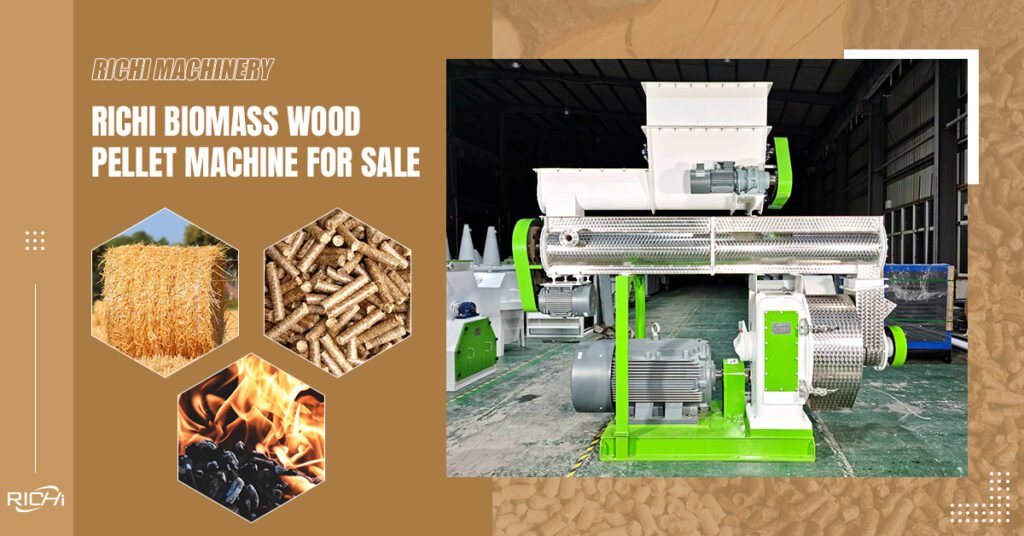
A bamboo pellet machine is an industrial device designed to compress processed bamboo material into dense cylindrical pellets using mechanical pressure and friction. These pellets are primarily used as biomass fuel, although other applications exist.
Compared with loose bamboo powder or chips, pelletized bamboo offers:
Higher energy density
Reduced transportation and storage costs
Uniform size and shape
More stable combustion behavior
The bamboo pellet machine typically operates as the core unit within a complete pellet production system that includes crushing, drying, cooling, and packaging stages.
Structural Components of Bamboo Pellet Machines
Raw Material Feeding System
Bamboo residues vary in particle size and fiber structure. Feeding systems are designed to regulate material flow and prevent bridging, ensuring consistent pelletizing conditions. https://richipelletizer.com/wood-chip-pellet-machine/
Pelletizing Die and Roller Assembly
The die and roller system determines pellet diameter, density, and durability. Due to bamboo’s higher fiber toughness compared with wood, dies often require enhanced wear resistance and optimized compression ratios.
Power and Transmission System
High-torque motors and robust gearboxes provide the energy required to compress bamboo material. Stable power transmission is essential to maintain continuous operation under high pressure.
Working Principle of Bamboo Pellet Formation
Bamboo pellet machines operate on the principle of mechanical densification. Properly prepared bamboo material, usually with moisture content between 10% and 15%, is fed into the pelletizing chamber.
During pellet formation:
Mechanical pressure increases rapidly
Friction generates heat
Natural binders within the bamboo activate
Material is forced through die holes
The extruded pellets are cut to length and cooled to stabilize their structure and mechanical strength.
Raw Material Preparation for Bamboo Pelletizing
Bamboo requires specific pre-processing steps to ensure efficient pellet production. Common preparation stages include:
Crushing or chipping bamboo into smaller pieces
Fine grinding to achieve uniform particle size
Drying to reduce moisture content
Removal of impurities such as sand or metal
Proper preparation significantly improves pellet quality and reduces wear on the pellet machine.
Types of Bamboo Pellet Machines
Flat Die Pellet Machines
Flat die machines are sometimes used for small-scale bamboo pellet production, particularly in research projects or localized energy applications.
Ring Die Pellet Machines
Industrial bamboo pellet production typically relies on ring die pellet machines due to their higher capacity, durability, and continuous operation capability.
The choice of machine type depends on production scale, raw material characteristics, and end-use requirements.
Applications of Bamboo Pellets
Renewable Energy and Heating
Bamboo pellets are used as fuel in pellet stoves, boilers, and industrial heating systems. Their high calorific value and low moisture content make them suitable for efficient combustion.
Industrial Thermal Use
In regions with bamboo-processing industries, bamboo pellets are often used to supply heat for drying, curing, or manufacturing processes.
Export-Oriented Biomass Fuel
Some bamboo pellet producers supply international markets, particularly in regions seeking diversified biomass fuel sources.
Environmental and Sustainability Considerations
Bamboo is widely recognized for its environmental benefits. It regenerates quickly without the need for replanting and can grow on marginal land unsuitable for traditional forestry.
Pelletizing bamboo residues reduces waste, prevents open burning, and contributes to cleaner energy systems. When sourced responsibly, bamboo pellets are often considered low-carbon or carbon-neutral fuels. Read what he said
The use of bamboo pellet machines aligns with circular economy principles by converting industrial by-products into valuable energy resources.
Global Market and Industry Adoption
The global bamboo pellet market is smaller than the wood pellet market but continues to grow. Asia remains the primary region for bamboo pellet production, though interest is increasing in Africa and Latin America.
Equipment suppliers range from local manufacturers to international companies. Global machinery providers such as RICHI Pelletizer have supplied pellet machines for bamboo biomass projects in various regions, supporting the expansion of bamboo pellet production.
Maintenance and Operational Challenges
Bamboo’s fibrous structure can increase wear on dies and rollers. Regular maintenance is essential to ensure stable operation.
Key maintenance practices include:
Monitoring die and roller wear
Maintaining proper lubrication
Controlling operating temperature
Replacing worn components on schedule
Manufacturers like RICHI emphasize robust materials and optimized designs to handle the specific demands of bamboo pelletizing.
Technological Trends and Future Outlook
Advancements in pellet machine design continue to improve the efficiency of bamboo pellet production. Emerging trends include:
Improved die materials for extended service life
Energy-efficient motors and drives
Automated monitoring and control systems
Integrated pellet production lines
As global demand for renewable energy grows, bamboo pellet machines are expected to play an increasingly important role in regions rich in bamboo resources.
Conclusion
The bamboo pellet machine represents a specialized yet increasingly important technology in the biomass energy sector. By converting fast-growing bamboo residues into standardized pellets, these machines support renewable energy production, waste reduction, and sustainable resource utilization.Understanding the technical principles, applications, and environmental context of bamboo pellet machines provides valuable insight into their role in the evolving global biomass landscape. Wood Pellet Production Plant in Romania